
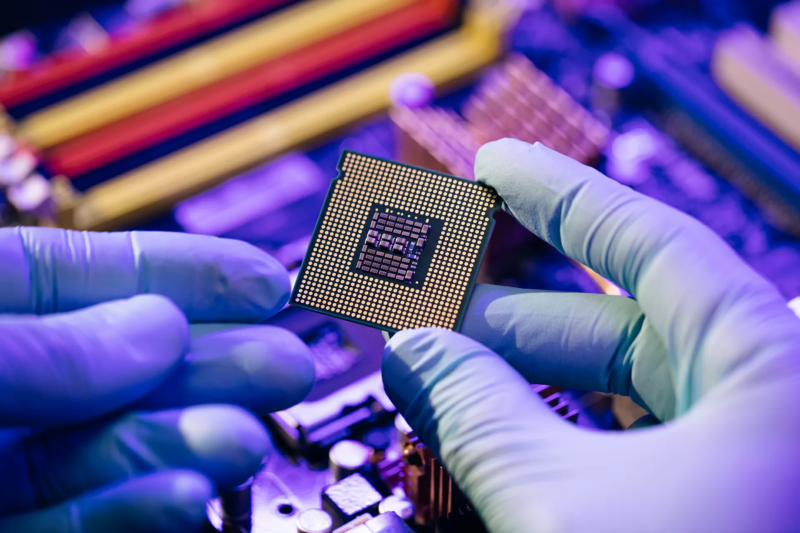
US chipmakers Intel and AMD notified Chinese customers on Saturday February 8 of catastrophic supply shortages for server graphics processing units, with Intel warning of delivery delays extending up to six months and AMD projecting lead times of eight to 10 weeks that have already driven prices up 10% in Chinese markets. The supply squeeze, which impacts major Chinese tech giants including Alibaba and Tencent who collectively purchase billions in server infrastructure annually, stems from explosive AI-specific chip demand that has overwhelmed global production capacity and exposed how concentrated semiconductor manufacturing creates systemic vulnerabilities when demand spikes. Following the money through this supply crisis reveals how the two companies that together control 80% of China’s server CPU market face losing that dominance to domestic Chinese chipmakers like Huawei and Loongson who are capitalizing on Western supply failures to accelerate substitution with indigenous alternatives that could permanently reshape global technology supply chains.
Intel commands approximately 60% of China’s server processor market while AMD holds 20%, creating combined market dominance that has generated tens of billions in annual revenue from Chinese customers who historically had no viable alternatives to American x86 architecture chips. However, the six-month delivery delays that Intel now admits represent untenable timeline for hyperscale data center operators building AI infrastructure that requires immediate capacity deployment rather than patient queuing for future chip allocations. When Alibaba’s cloud division needs servers to support expanding AI workloads and Intel quotes six-month delivery, the company faces impossible choice between halting expansion plans or sourcing alternative processors that may offer inferior performance but possess the critical advantage of actual availability.
The global semiconductor industry supply chain disruption that created current GPU shortages stems from soaring demand for AI-specific chips that has overwhelmed foundry capacity at TSMC, Samsung, and other manufacturers producing cutting-edge processors. Smartphone makers have been among the first casualties, facing allocation cuts as foundries prioritize more profitable data center chips commanding premium pricing and generating superior margins. The reallocation of manufacturing capacity toward AI accelerators creates cascading shortages across consumer electronics, automotive semiconductors, and industrial applications where chips produced on slightly older process nodes suddenly become scarce as foundries convert that capacity toward newer processes serving AI demand.
China’s domestic semiconductor industry, which has invested hundreds of billions attempting to achieve technological self-sufficiency following years of U.S. export restrictions and national security concerns, now sees the Western supply crisis as validation of Beijing’s strategic priorities and opportunity to accelerate market share gains. Huawei’s Kunpeng server processors and Loongson’s MIPS-based chips have historically struggled to compete against Intel and AMD on performance and ecosystem compatibility, relegating them to niche applications and government procurement mandates rather than winning commercial deployments based on technical merit. However, when Intel cannot deliver chips for six months, performance advantages become irrelevant compared to availability, creating window for Chinese alternatives to establish beachheads that could prove permanent even after Western supply normalizes.
The geopolitical implications of semiconductor supply shortages driving China toward domestic chip alternatives extend far beyond immediate revenue impacts for Intel and AMD into fundamental questions about technological decoupling and whether Western dominance in critical technologies can be sustained when supply reliability proves inadequate. The Biden administration’s CHIPS Act invested $52 billion attempting to reshore semiconductor manufacturing capacity to United States, recognizing that excessive dependence on Asian foundries creates national security vulnerabilities and economic risks. However, the CHIPS Act funding focuses primarily on leading-edge logic chips and memory rather than the specialized AI accelerators experiencing current shortages, suggesting that industrial policy hasn’t fully addressed the specific bottlenecks now constraining supply.
Taiwan Semiconductor Manufacturing Company’s position as the world’s dominant contract chipmaker creates single point of failure where geopolitical tensions surrounding Taiwan generate enormous supply chain risks. If China were to blockade or invade Taiwan, the resulting disruption to semiconductor production would devastate global technology industries far more severely than current AI-driven shortages that merely represent demand overwhelming capacity rather than actual production cessation. The strategic vulnerability has driven efforts to diversify foundry capacity beyond Taiwan, though TSMC’s technological lead remains so substantial that replicating their capabilities requires years of investment and development that cannot quickly solve near-term supply constraints.
The financial impact of semiconductor shortages manifests through multiple channels beyond direct sales disruptions for Intel and AMD. Cloud service providers experiencing delays in server deployments face capacity constraints that limit ability to onboard new customers or expand existing accounts, directly impacting revenue growth that drives their valuations. Software companies dependent on cloud infrastructure to deliver services face performance degradation or outages when providers cannot expand capacity to meet demand, creating customer dissatisfaction and churn. The cascading effects mean that semiconductor shortages create ripple effects throughout entire technology ecosystem rather than remaining isolated to chip manufacturers and direct customers.
Stock market implications from the supply crisis have already materialized through technology sector selloffs that erased over $200 billion in market capitalization during late January and early February as investors recalibrated expectations about growth trajectories when supply constraints limit revenue potential. Intel shares have declined approximately 8% year-to-date as analysts downgrade revenue forecasts based on lost Chinese sales and competitive threats from domestic alternatives gaining market share during supply shortages. AMD has fared somewhat better given its smaller China exposure, though the company still faces headwinds from allocation challenges and pricing pressure as customers frustrated by availability issues explore alternative architectures.
The memory chip shortage that has driven Korean KOSPI above 5,000 represents different dimension of semiconductor supply crisis, where high-bandwidth memory essential for AI accelerators faces even more severe capacity constraints than logic chips. Samsung and SK Hynix dominate HBM production, creating oligopolistic market structure where the two companies can effectively dictate pricing and allocation to customers desperate for supplies that enable their AI infrastructure deployments. The memory shortage demonstrates how semiconductor industry consolidation creates power imbalances favoring suppliers over customers when tight capacity allows producers to extract maximum pricing without fear of competitive alternatives.
For investors seeking to capitalize on semiconductor sector volatility and supply chain disruptions, the crisis creates winners and losers depending on specific market positions and technological capabilities. Companies producing chips on older process nodes using mature capacity that isn’t allocated toward AI accelerators face less severe constraints and may gain share from customers unable to source preferred cutting-edge alternatives. Semiconductor equipment manufacturers like ASML and Applied Materials benefit from foundry investments in new capacity to address shortages, though equipment deliveries and fab construction timelines mean that capacity additions take two to three years to materialize.
The co-working space industry’s remarkable comeback following pandemic devastation that sent major players into bankruptcy protection demonstrates how commercial real estate adapts to changing work patterns that persist beyond temporary disruptions. Co-working spaces now total 158.3 million square feet across 8,800 U.S. locations, up from 115.6 million square feet and 5,800 locations three years ago, reflecting sustained demand from remote workers, solopreneurs, and increasingly from larger firms seeking flexible workspaces when adding employees or entering new markets. The expansion validates thesis that hybrid work represents permanent shift rather than temporary pandemic response, creating ongoing demand for third spaces between home and traditional offices.
The new era of co-working differs substantially from pre-pandemic model dominated by WeWork and other multi-location operators pursuing aggressive growth funded by venture capital and public markets. Today’s industry features more single-site operators focused on profitability rather than expansion, targeting specific geographic markets or industry niches rather than attempting to build global brands. The shift toward sustainable business models rather than growth-at-all-costs reflects broader venture capital market evolution where profitability matters more than revenue growth and where unit economics receive scrutiny that was absent during zero-interest-rate era when cheap capital funded experimentation.
Larger companies’ adoption of co-working spaces represents particularly significant trend, as Fortune 500 firms historically viewed flexible workspaces as inappropriate for corporate operations requiring security, privacy, and consistent quality standards. However, pandemic-driven remote work normalization combined with commercial real estate cost pressures has made co-working attractive for satellite offices, temporary project teams, and employees relocating to new cities. The corporate adoption provides co-working operators with larger, more stable revenue streams compared to solopreneur memberships that churn frequently and generate modest per-seat economics.
Looking ahead through 2026, the semiconductor supply crisis appears likely to persist as AI infrastructure buildout continues accelerating while new foundry capacity remains years away from meaningful production volumes. Intel’s announcement of six-month GPU delivery delays suggests the company sees no near-term resolution to allocation challenges, while AMD’s eight to ten week lead times similarly indicate constrained capacity. The extended timelines create sustained opportunity for Chinese domestic chipmakers to establish market positions that could prove durable even after Western supply normalizes, permanently fragmenting what had been Intel and AMD’s China market dominance.

