

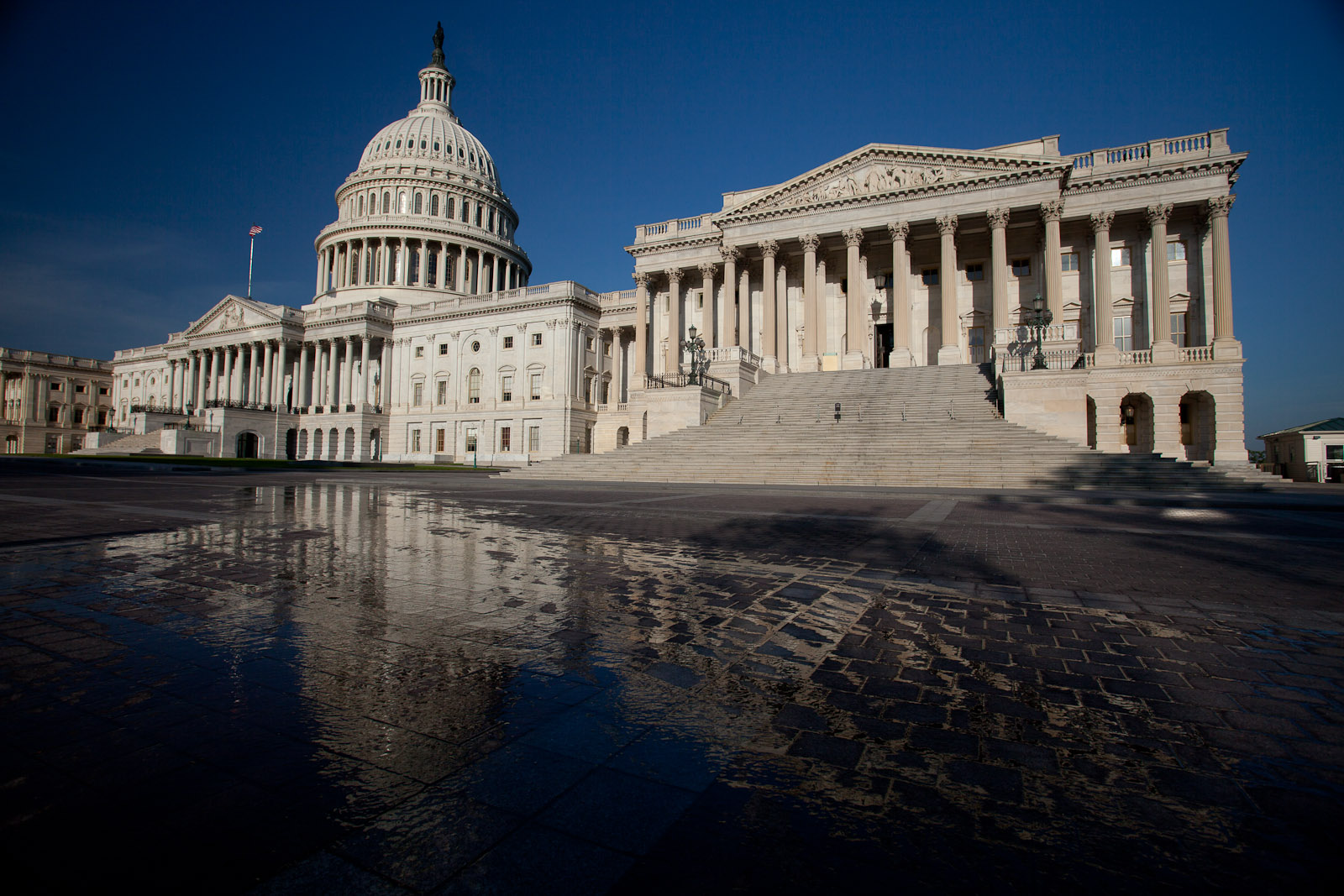
Washington remains locked in a political stalemate as the federal government shutdown entered its ninth day on Thursday, October 9, 2025, with Senate Democrats refusing to support a continuing resolution that has already passed the House of Representatives. The impasse has left hundreds of thousands of federal workers without pay and threatens to disrupt essential government services as both parties dig in their heels over healthcare policy demands.
House Speaker Mike Johnson acknowledged during a Thursday press conference that emotions are running high on Capitol Hill, stating he was “very angry” about the dangerous political environment created by the shutdown. The Louisiana Republican has consistently argued that Democrats are holding military service members and federal workers hostage over partisan healthcare demands that could be negotiated separately from basic government funding.
The core of the dispute centers on Democratic insistence that any funding bill must include an extension of Affordable Care Act subsidies, which are set to expire at the end of the year. Republicans have proposed a clean continuing resolution that would fund the government through mid-November, arguing that healthcare subsidies should be addressed through separate negotiations rather than tying them to emergency funding measures that keep the government operational.
The Senate voted Thursday for the seventh consecutive time on competing funding proposals, with the House-passed Republican measure failing to advance in a 54-45 vote. The Republican bill requires sixty votes to overcome procedural hurdles, meaning Democrats must provide support for any funding measure to pass. Only three Senate Democrats have crossed party lines to support the Republican proposal throughout the shutdown, a number that has remained unchanged since the funding lapse began on October first.
President Trump addressed the political standoff during a Cabinet meeting at the White House, accusing Democrats of using healthcare as a political weapon. The president emphasized that his administration has been working to reduce prescription drug costs and protect Americans’ access to healthcare, pushing back against Democratic framing of the debate as a Republican-created healthcare crisis.
The shutdown’s immediate consequences are becoming increasingly severe for American families and essential government operations. Military service members are expected to miss their first paycheck on Wednesday, October fifteenth, as the Senate has announced no further votes until Tuesday. This development has sparked particular outrage among Republican lawmakers who argue that defending the nation should never be politicized or used as leverage in budget negotiations.
Air traffic control staffing shortages have emerged as a critical safety concern, with Southwest Airlines issuing a companywide memo urging employees to remain vigilant about operational reliability as controller availability remains dynamic and could change rapidly at any facility. The Federal Aviation Administration has instituted flight delays at multiple major airports due to low controller staffing levels, raising questions about whether some controllers are staging unofficial work actions to protest the funding lapse.
Republican leadership has maintained a unified front in blaming Senate Minority Leader Chuck Schumer and his Democratic caucus for the shutdown, arguing that the party controlling neither chamber of Congress nor the White House cannot credibly claim Republicans are responsible for the impasse. House Republicans have pushed back against claims that they control all levers of government, with Representative Nicole Malliotakis pointing out that Senate Democrats possess the power to block any funding bill that lacks sixty votes.
The Senate did manage to pass its version of the National Defense Authorization Act on Thursday evening with a 77-20 bipartisan vote after working through numerous amendments. The legislation includes provisions to end the authorization for the use of military force in Iraq, demonstrating that Congress can still function on certain bipartisan priorities even amid the broader funding crisis. However, this accomplishment stands in stark contrast to the continued failure to secure basic government operations funding.
Democrats have defended their position by arguing that millions of Americans face dramatic increases in health insurance premiums if the subsidies expire without action. Senator Angela Alsobrooks of Maryland, representing a state with significant federal workforce concentration, warned the shutdown is creating catastrophic challenges for federal workers and contractors. However, critics counter that Democratic leaders could vote to reopen the government immediately and then negotiate healthcare policy from a position where essential services are functioning and workers are being paid.
The political calculation behind the Democratic strategy appears focused on forcing Republicans to accept their healthcare demands by maintaining public pressure through the shutdown’s visible consequences. Some Democratic senators have privately expressed concerns about their party’s exit strategy if President Trump and congressional Republicans refuse to capitulate, according to political observers monitoring the negotiations. The risk for Democrats lies in being blamed for extended disruption to government services while failing to achieve their policy objectives.
Conservative policy analysts have noted the irony of Democrats positioning themselves as defenders of federal workers and military families while simultaneously blocking funding that would immediately restore their paychecks. The Republican argument emphasizes that a clean continuing resolution would allow government operations to resume while providing time for comprehensive negotiations on healthcare policy and other contentious issues without the pressure of furloughs and service disruptions.
As the shutdown enters its second week with no resolution in sight, the political stakes continue to escalate for both parties. Republicans maintain that their approach of separating routine government funding from controversial policy debates represents responsible governance, while Democrats insist that addressing the impending healthcare subsidy expiration cannot wait. The American people and federal workforce remain caught in the middle of this high-stakes political confrontation with no clear path forward emerging from either side of the negotiating table.
The question now facing Washington is whether the mounting pressure from missed paychecks, service disruptions, and public frustration will force a compromise before the shutdown extends even longer and the political damage becomes irreparable for one or both parties involved in this budget showdown.

Leave a comment