

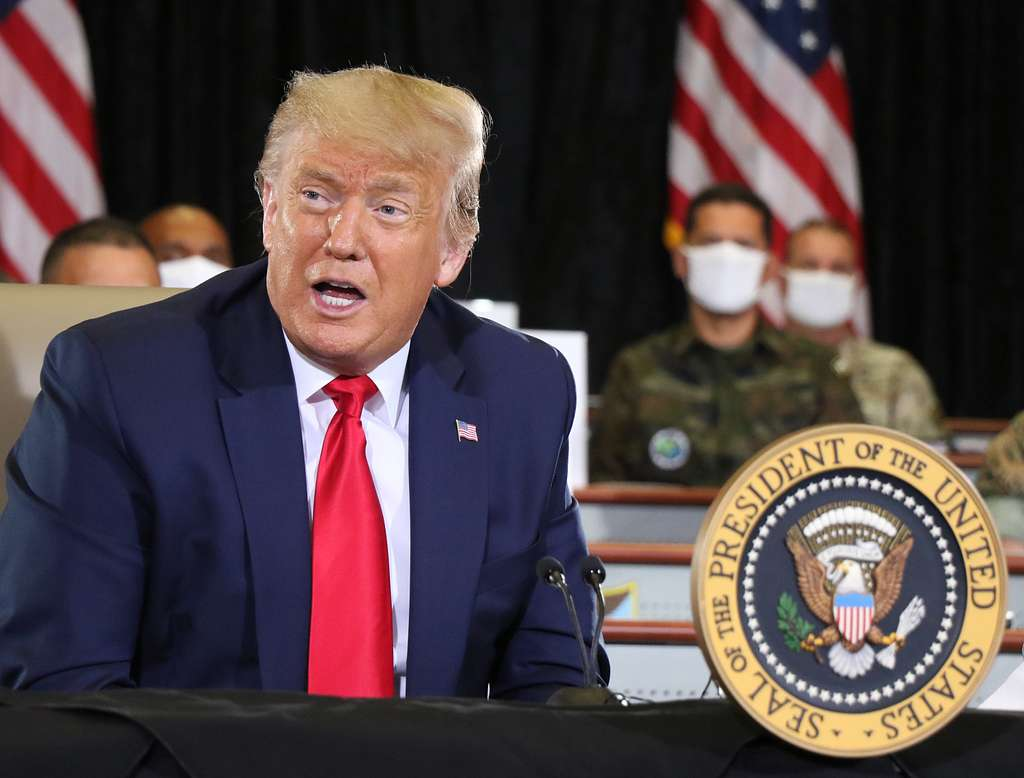
Former FBI Director James Comey entered a not guilty plea on Wednesday, October 8, 2025, marking a dramatic turning point in President Donald Trump’s campaign to hold federal law enforcement officials accountable for what conservatives have long described as a politicized investigation into his 2016 presidential campaign. Comey appeared at his arraignment in federal court where his lawyers announced plans to file at least five motions to have the case dismissed, setting up what promises to be a contentious legal battle over whether the former FBI director misled Congress about his role in leaking classified information to the media.
Comey faces charges of providing false statements and obstructing a congressional proceeding, with potential prison time of up to five years if convicted. The charges stem from testimony he provided to the Senate Judiciary Committee in September 2020, when he claimed under oath that he had never authorized anyone at the FBI to serve as an anonymous source for media reports about the bureau’s investigation into the Trump campaign’s alleged Russia connections.
The indictment represents a watershed moment in the ongoing debate over whether senior government officials who launched investigations into Trump during his first term should face legal consequences for actions that many Republicans believe constituted an abuse of power. Deputy Attorney General Todd Blanche defended the prosecution on Fox News, characterizing it as equal application of the law and noting that Comey would be treated exactly like every other individual charged with similar crimes.
Trump has maintained throughout both of his presidential terms that the Russia investigation was fundamentally illegitimate, a position that gained significant traction among conservative voters who viewed the FBI’s actions as an unprecedented weaponization of federal law enforcement against a sitting president. The former FBI director’s decision to authorize leaks about ongoing investigations while simultaneously denying such authorization under oath represents exactly the kind of conduct that Trump supporters argue demonstrates a double standard in how justice is administered depending on one’s political affiliations.
Comey’s defense team plans to challenge the appointment of prosecutor Lindsey Halligan and will file motions arguing that the case represents vindictive and selective prosecution. This strategy mirrors the same arguments that Trump’s own attorneys employed when special counsel Jack Smith brought federal cases against the former president in 2023, highlighting what conservatives see as a fundamental inconsistency in how the justice system treats political figures based on their party affiliation.
The legal proceedings coincide with President Trump’s broader confrontation with state and local officials who have attempted to obstruct his administration’s immigration enforcement priorities. Trump threatened to invoke the Insurrection Act this week as he continues to clash with state and municipal authorities over the limits of his ability to send Immigration and Customs Enforcement agents into American cities. This constitutional showdown reflects the administration’s determination to fulfill campaign promises on border security despite resistance from Democratic governors and mayors who have declared their jurisdictions sanctuary cities.
Trump stated in an Oval Office meeting with reporters that the Insurrection Act exists for a reason, indicating he would invoke it if people were being killed and courts or governors were preventing federal law enforcement from performing their duties. The president’s willingness to consider using this rarely invoked federal statute demonstrates his commitment to enforcing immigration laws even when facing organized opposition from state and local governments that refuse to cooperate with federal immigration authorities.
The administration’s position rests on the fundamental principle that federal law supersedes state and local policies, particularly when those policies actively interfere with immigration enforcement operations. Trump administration officials argue that protesters have been physically preventing ICE agents from performing their lawful duties, creating situations where federal officers cannot execute the immigration laws passed by Congress. This interference has prompted the president to deploy National Guard troops to cities including Portland and Chicago, where local officials have refused to provide adequate protection for federal immigration enforcement personnel.
On October 9, U.S. District Judge April Perry ruled against the Trump administration in Illinois, citing no significant evidence of a danger of rebellion and blocking National Guard deployment in the state for at least two weeks. The administration has appealed this ruling, arguing that federal courts should not be able to prevent the president from exercising his constitutional authority to ensure that federal laws are faithfully executed throughout the United States.
Democratic governors and attorneys general have characterized the troop deployments as unconstitutional overreach, but conservative legal scholars argue that the administration is simply enforcing federal immigration statutes that remain valid law despite their unpopularity among progressive politicians. The clash highlights fundamental disagreements about federalism and whether state and local governments can nullify federal law through non-cooperation policies that create safe havens for illegal immigration within American cities.
The convergence of the Comey prosecution and the immigration enforcement confrontation illustrates a broader pattern that conservatives describe as the restoration of equal justice and the rule of law after years of selective enforcement based on political considerations. Trump supporters argue that federal officials who leaked classified information to harm a sitting president should face the same legal accountability that would apply to any other American who violated their oath of office by providing false testimony to Congress.
Republicans in Congress continue searching for Democratic support to end the government shutdown that has extended more than a week, with negotiations stalled over healthcare subsidy extensions that Democrats are demanding as part of any funding agreement. The shutdown adds another layer of complexity to an already tense political environment in Washington, where partisan divisions over fundamental questions of governance have brought routine government operations to a standstill.
Critics of the Comey prosecution argue that Trump is simply pursuing political revenge against his adversaries, but administration officials counter that allowing senior law enforcement officials to lie under oath without consequences would establish a dangerous precedent that places certain government employees above the law. The case will test whether courts view the prosecution as a legitimate exercise of prosecutorial discretion or an improper attempt to criminalize political disagreements that should be resolved through democratic processes rather than criminal trials.
The legal and constitutional battles consuming Washington during this period reflect deeper questions about the balance of power between federal and state governments, the proper limits of presidential authority, and whether justice should be administered equally regardless of political affiliation. As the Comey case proceeds toward trial and the immigration enforcement confrontations escalate through federal courts, these fundamental questions about American governance will continue shaping political discourse and determining the boundaries of executive power in the modern constitutional system.

Leave a comment