

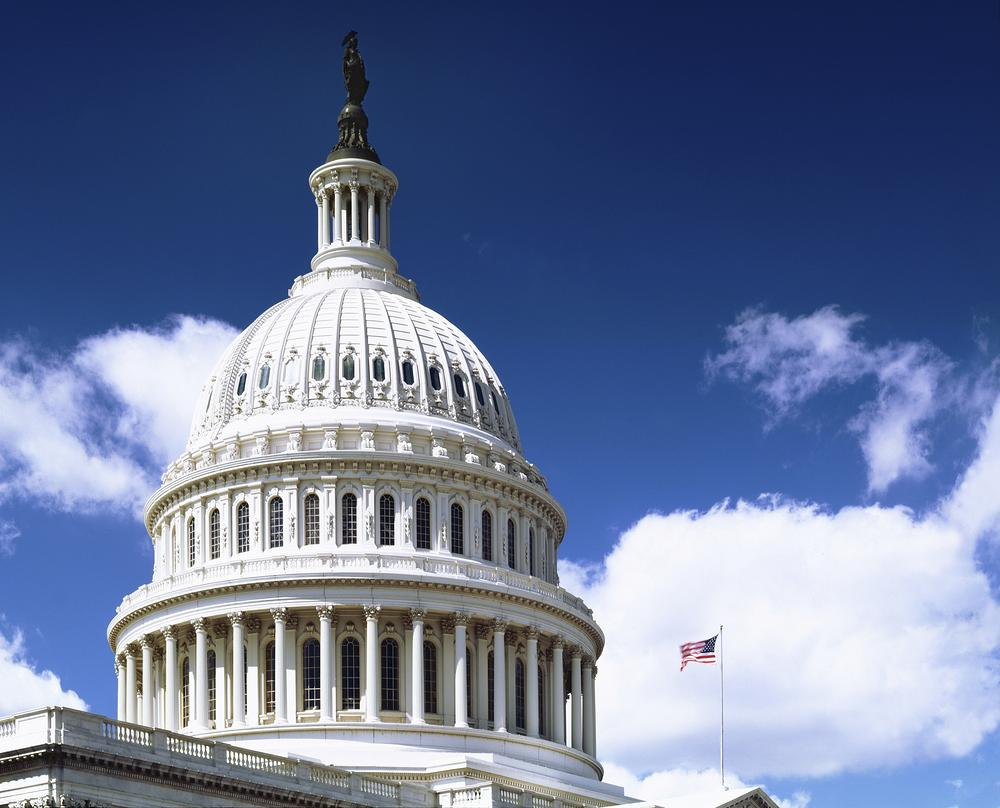
The government shutdown entered its 23rd day Thursday, October 23, 2025, with House Minority Leader Hakeem Jeffries expressing cautious openness to a potential bipartisan Senate bill to pay federal workers even as Democrats maintained their core demands for Affordable Care Act subsidy extensions. Jeffries said House Democrats will consider in good faith anything bipartisan that emerges from the Senate when asked about efforts for a bipartisan deal, marking the first significant softening of Democratic opposition to piecemeal funding measures.
GOP Senator Ron Johnson told reporters that he intends to work out differences with Democrats on legislation to pay federal workers, suggesting that rank-and-file members from both parties recognize the mounting human costs of the shutdown and are searching for compromise solutions outside formal leadership negotiations. However, Jeffries told reporters earlier in the week that he doesn’t support Johnson’s bill because it did not cover furloughed workers, arguing that it’s a political ploy for President Trump to pick and choose which employees should be compensated.
The potential breakthrough on worker pay comes as food assistance benefits face imminent collapse. Democratic Senator Dick Durbin of Illinois said that in Illinois there are 1.9 million who receive SNAP benefits, adding that if we don’t get this resolved by November 1st, there’s questions whether they’ll get any payment at all. The Supplemental Nutrition Assistance Program serves approximately 40 million low-income Americans, making its potential suspension a humanitarian crisis that Democrats argue Republicans are deliberately manufacturing to force political concessions.
Senators admitted Thursday they’re concerned that funding for federal food assistance benefits is at risk amid the ongoing shutdown, but it didn’t appear that pressure was bringing either side immediately closer to negotiating an end to the stalemate. The mounting crisis creates particular pressure on Republicans representing rural districts where SNAP participation rates are highest, potentially fracturing GOP unity on maintaining the shutdown until Democrats agree to reopen the government without healthcare subsidy guarantees.
President Trump and members of his Cabinet provided updates during a lengthy White House roundtable on his administration’s crime and drug crackdown. Trump insisted that he could continue to launch strikes against alleged drug traffickers without Congress first passing an official declaration of war, asserting expansive executive authority to conduct military operations targeting narcotics smuggling operations in international waters and potentially within foreign territory.
Trump also suggested his administration would soon begin targeting those deemed as cartel members within countries like Venezuela, in addition to continuing to strike alleged drug boats in international waters. The president denied however that the U.S. sent the American B-1 Lancer bomber that flew near the coast of Venezuela, addressing reports of American military aircraft conducting reconnaissance missions near Venezuelan territory.
Defense Secretary Pete Hegseth shared video showing boats being struck in international waters, with two people onboard killed according to Hegseth on October 21st. The strikes have drawn criticism from Colombian President Gustavo Petro, who accused the United States of killing innocent Colombians and operating outside international law. Trump responded by calling Petro an illegal drug leader and threatening to cut off foreign aid to Colombia while raising tariffs on Colombian goods if Petro continues criticizing American counter-narcotics operations.
The escalating confrontation with Colombia demonstrates Trump’s willingness to use economic coercion to silence foreign criticism of U.S. military operations, even when those operations occur in international waters near the complaining nation’s territorial boundaries. Conservative foreign policy analysts argue that Latin American governments have failed for decades to control drug trafficking organizations, justifying aggressive American intervention to protect U.S. citizens from the fentanyl crisis killing tens of thousands annually.
The federal government shutdown has created increasingly visible consequences across Washington. Satellite images revealed that the entire East Wing of the White House has been demolished as part of Trump’s controversial construction of a 55,000-square-foot ballroom that critics argue will overwhelm the historic building’s classical design. The National Trust for Historic Preservation urged the administration to pause demolition, though Trump defended the project as personally funded and receiving great reviews from supporters.
Trump said the ballroom would cost about $300 million, significantly higher than the originally projected $200 million price tag. The president defended the East Wing demolition, noting how certain areas are being left and that after really a tremendous amount of study with some of the best architects in the world, the administration determined that really knocking it down rather than trying to use a little section made more sense architecturally.
The White House construction project has become a flashpoint for critics who view Trump’s willingness to demolish historic structures during a government shutdown as demonstrating misplaced priorities while federal workers go without paychecks and essential services face disruption. However, administration defenders note that the ballroom is privately funded and that maintaining the White House as a functioning residence and ceremonial venue requires periodic renovations regardless of political circumstances.
Air traffic control staffing shortages continued creating flight delays at major airports across the country. The Federal Aviation Administration reported that 39 facilities are currently experiencing shortages, with ground delays longer than two hours expected at some affected airports. Major hubs including New York’s LaGuardia and JFK International, Houston’s George Bush International and William P. Hobby have seen significant impacts throughout the day.
At least 333 staffing problems have been reported since the start of the shutdown according to FAA data, though not every staffing shortage results in delays as controllers can reroute flights. However, sometimes there is no choice but to slow planes down to maintain safety, creating cascading disruptions across the national airspace system. Transportation Secretary Sean Duffy has blamed Democrats for controller pay delays while warning that the administration will make necessary cuts if the shutdown continues.
The Trump administration dispatched more than 100 federal agents to the San Francisco Bay Area as it seeks to ramp up immigration raids in Northern California according to the San Francisco Chronicle. The deployment is a likely precursor to President Trump deploying National Guard troops to San Francisco, following a pattern established in other sanctuary cities that refuse to cooperate with federal immigration enforcement.
California’s Democratic Governor Gavin Newsom blasted the deployment as right out of the dictator’s handbook, characterizing federal immigration enforcement as authoritarian overreach rather than legitimate execution of congressionally enacted statutes. Conservative commentators note that Newsom’s rhetoric demonstrates the performative resistance strategy that blue state governors have adopted to rally progressive activists while doing little to actually protect illegal immigrants from deportation.
In Illinois, protesters confronted masked federal agents Wednesday as they carried out multiple arrests in Chicago’s Little Village neighborhood and the bordering suburb of Cicero. The agents were joined by Border Patrol commander Gregory Bovino, whose forces were recently reprimanded by a federal judge for violating a prior court order restricting the use of tear gas and other less lethal weapons on peaceful demonstrators, journalists and clergy.
The expanding immigration enforcement operations demonstrate the Trump administration’s determination to fulfill campaign promises on border security despite organized resistance from Democratic governors, mayors, and progressive activists who view deportations as human rights violations. The confrontations between federal agents and local protesters create potential for violence that could galvanize either support for or opposition to Trump’s immigration agenda depending on how incidents are portrayed in media coverage.
House Speaker Mike Johnson said Republicans have a plan to address healthcare subsidies as the issue remains a major sticking point to reopening the federal government. Asked if the GOP would have a plan to address the subsidies if the government reopened, Johnson said yes repeatedly, adding that Republicans have proposals and could have that ready immediately.
Johnson said that addressing the subsidies, which are set to expire at the end of this year, was never possible or appropriate on a continuing resolution bill to fund the government for a few weeks. The Speaker’s comments suggest Republicans may be preparing to offer Democrats a healthcare vote in exchange for clean government funding, though the details of any proposal remain unclear and progressives have indicated they will not accept symbolic votes without guaranteed policy outcomes.
The question now facing Washington is whether Jeffries’ openness to bipartisan worker pay legislation represents genuine flexibility or merely tactical positioning to appear reasonable while maintaining core demands. If Senate moderates can craft legislation that pays all federal workers including furloughed employees, Democrats may face difficult decisions about whether to support reopening government operations before securing healthcare policy guarantees.
Republicans calculate that as SNAP benefits face collapse and federal workers miss additional paychecks, public pressure will intensify on Democrats to accept clean funding and negotiate healthcare separately. However, polling continues showing that 60% of Americans view the subsidies as important enough to justify Democratic intransigence, suggesting voters may ultimately blame Republicans for the shutdown despite Democratic refusal to vote for funding legislation.
As the shutdown extends beyond three weeks with no clear resolution emerging, the human costs continue mounting while both parties dig in on fundamentally incompatible positions about whether routine government funding should be contingent on resolving controversial policy disputes. The bipartisan worker pay discussions represent the most promising avenue for partial resolution, though whether such legislation can pass both chambers and secure presidential signature remains highly uncertain given the entrenched positions both parties have adopted throughout this budget crisis.Retry

Leave a comment