

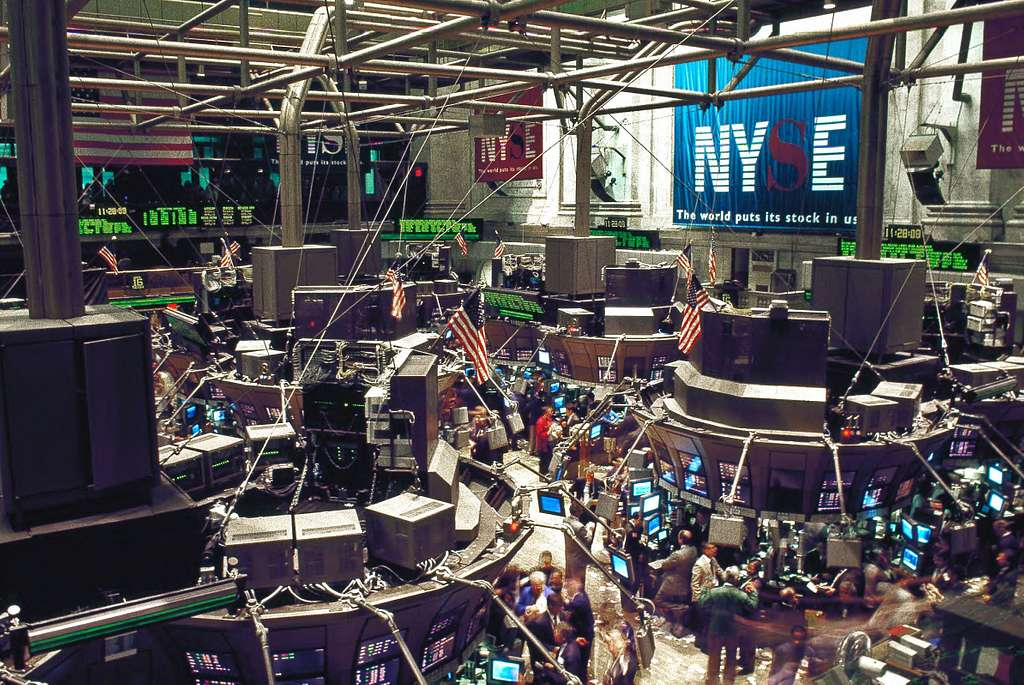
Wall Street roared higher Friday, October 24, as better-than-expected inflation data reinforced investor confidence that the Federal Reserve will continue cutting interest rates while corporate earnings remained robust enough to justify elevated valuations. The Dow gained 473 points or 1.01% and closed at 47,207.12, closing above 47,000 for the first time ever, capping a week that saw all three major indexes post their best performance since summer despite ongoing concerns about stretched valuations and geopolitical uncertainty.
The broader S&P 500 climbed 0.79% while the Nasdaq gained 1.15%, with Wall Street’s fear gauge, the VIX, sinking 5%. The powerful rally demonstrated that investors remain willing to chase equity exposure despite warnings from Bank of America strategists that 60% of their proprietary bear market indicators are flashing red signals typically associated with market peaks.
Wall Street sentiment got a boost Friday after Consumer Price Index data for September showed annual inflation heated up but less than expected. The delayed economic data release, originally scheduled for October 15th but postponed due to the ongoing government shutdown, showed headline inflation rising to 3.1% on a year-over-year basis, up from 2.9%, while monthly inflation ticked down to 0.39% from 0.40%. Core CPI, which excludes volatile food and energy prices, held steady at 0.30% and 3.1% on monthly and yearly bases respectively.
The inflation numbers boosted expectations that the Federal Reserve will cut interest rates at its upcoming policy meetings next week and in December. Fed rate cuts can lower savings and borrowing rates, encouraging spending and investing and boosting business activity, creating sustained tailwind for the stock market. Conservative investors recognize that the Trump administration’s deregulatory agenda and tax policies have created favorable conditions for corporate profit growth that justify maintaining equity allocations despite elevated price-to-earnings ratios.
Thursday’s session was dominated by energy sector strength following aggressive Treasury Department sanctions targeting major Russian oil producers. The U.S. government announced new sanctions Thursday targeting several major Russian oil companies, intensifying geopolitical tensions and shaking global energy markets. The sanctions aimed at curbing Moscow’s energy revenues over its continued military actions in Ukraine immediately sent crude oil prices soaring.
Oil prices jumped about 5% to a two-week high Thursday after the United States imposed sanctions on major Russian energy giants like Rosneft and Lukoil in response to Moscow’s war in Ukraine. The move spurred energy companies in China and India to consider reducing their imports of Russian crude, potentially tightening global oil supplies and benefiting American energy producers. Brent crude climbed $3.40 or 5.4% to close at $65.99 per barrel, while WTI crude advanced $3.29 or 5.6% to settle at $61.79 per barrel.
The S&P 500 Energy Index jumped more than 2%, making it the day’s best-performing sector. Yet broader market sentiment remained mixed as higher oil prices stoked inflation concerns and renewed fears that the Fed might delay interest-rate cuts. Shares of Marathon Petroleum Corporation and Phillips 66 rose 3.9% and 3.4% respectively, demonstrating how American energy companies stand to benefit from sanctions that constrain Russian production while supporting global crude prices.
The sanctions represent a strategic victory for the Trump administration’s approach to weakening Russia’s ability to finance military operations in Ukraine without requiring massive American aid packages. By targeting Moscow’s primary revenue source, Treasury Secretary Scott Bessent demonstrated that economic warfare can achieve foreign policy objectives more efficiently than endless military assistance. Conservative foreign policy experts have long argued that cutting off Russia’s oil income would prove more effective than shipping weapons to Ukraine.
On Thursday, the White House officially confirmed that Donald Trump would meet with Xi Jinping next week during his Asia trip, providing a welcome dose of clarity amid escalating U.S.-China trade tensions. Markets greeted the news favorably, with major indexes rising as investors saw the scheduled summit as a de-escalation signal that might ease trade conflict and reduce uncertainty. The confirmation helped relieve some market nerves after recent threats of tariffs and export controls, even though investors remained cautious given the lack of specifics on the agenda or outcomes.
Corporate earnings continue to impress Wall Street, with Ford shares rising 12% Friday and having their best day since 2020 after the automaker posted strong third-quarter earnings results. The Detroit manufacturer’s strong performance demonstrated that traditional American industrial companies remain competitive and profitable despite challenges from electric vehicle manufacturers and foreign competition.
When the Fed is lowering rates and earnings are good, markets don’t go down very much, said Bob Doll, chief executive officer at Crossmark Global Investments. His assessment reflects the fundamental drivers supporting current equity valuations, though critics note that earnings growth must accelerate significantly to justify price levels that some metrics suggest exceed dotcom bubble peaks.
Earnings drive stocks, and earnings have been pretty good, Doll added. The S&P 500 and Nasdaq posted their best week since early August, while the Dow posted its best week since early July, demonstrating that despite periodic volatility, the fundamental trend remains supportive of equity prices as long as corporate profits continue exceeding analyst expectations.
The government shutdown’s extension into its 24th day has created an information vacuum that paradoxically may support stock prices by preventing release of economic data that could complicate the Federal Reserve’s rate-cutting trajectory. Without employment reports, retail sales figures, or other monthly statistics, investors must rely on corporate earnings reports and anecdotal evidence from business leaders, creating a simplified analytical framework that focuses on company-specific fundamentals rather than macroeconomic trends.
Bitcoin maintained relative stability during Friday’s equity rally, continuing its recovery from the mid-October crash that saw the cryptocurrency plunge from nearly $126,000 to below $104,000. The digital asset’s resilience compared to gold’s earlier 5% single-day decline has strengthened arguments that cryptocurrency markets have matured beyond their reputation for extreme volatility, though skeptics note that Bitcoin remains far more volatile than traditional safe-haven assets over longer time horizons.
Treasury yields edged lower Friday as inflation data came in slightly cooler than feared, with the 10-year Treasury yield hovering near 4.3%. The modest decline in yields provided additional support for equity valuations by reducing the discount rate applied to future corporate earnings, though conservative fixed-income investors recognize that inflation remains well above the Federal Reserve’s 2% target and could require additional monetary tightening if price pressures accelerate.
Gold prices consolidated Friday after the previous week’s dramatic 5% single-day plunge demonstrated that even assets traditionally viewed as stable stores of value can experience violent moves when speculative positioning becomes extended. The precious metal’s volatility has prompted portfolio managers to reassess allocation strategies, with some reducing gold exposure in favor of dividend-paying equities that offer income generation alongside capital appreciation potential.
The National Association of Realtors reported that existing home sales for September increased to 4.06 million units from August’s 4 million units, providing evidence that housing market activity is stabilizing after a prolonged period of weakness caused by elevated mortgage rates. The modest improvement suggests that the Trump administration’s push for reduced regulation and increased housing construction may be gaining traction, creating opportunities for homebuilders and related industries.
The question facing investors as October concludes is whether Friday’s powerful rally represents the beginning of a year-end melt-up that could push indexes dramatically higher, or merely a temporary relief bounce within a broader corrective phase. Conservative strategists note that seasonal patterns typically favor equity performance during the final two months of the year, while valuation concerns and technical deterioration suggest caution remains warranted despite Friday’s impressive advance.
The confluence of dovish Federal Reserve policy, strong corporate earnings, and Trump’s scheduled meeting with Xi Jinping creates a potentially constructive setup for risk assets heading into the holiday season. However, the government shutdown’s continuation threatens to disrupt economic activity and create political uncertainty that could weigh on investor sentiment if the impasse extends significantly longer. The energy sector’s strength following Russian sanctions demonstrates that geopolitical developments continue creating winners and losers across different industry groups, rewarding investors who maintain diversified exposure rather than concentrating portfolios in narrow themes.
As markets prepare for next week’s Federal Reserve policy meeting and Trump’s Asia summit, the stage is set for either a powerful continuation of Friday’s rally or a sharp reversal if events disappoint elevated investor expectations. The ability of corporate America to continue delivering earnings growth despite elevated costs and uncertain demand will ultimately determine whether current valuations prove justified or represent speculative excess that future corrections will punish. For now, momentum favors the bulls, with Friday’s record closes providing technical confirmation that the path of least resistance remains higher despite legitimate concerns about stretched valuations and slowing economic growth.

Leave a comment