

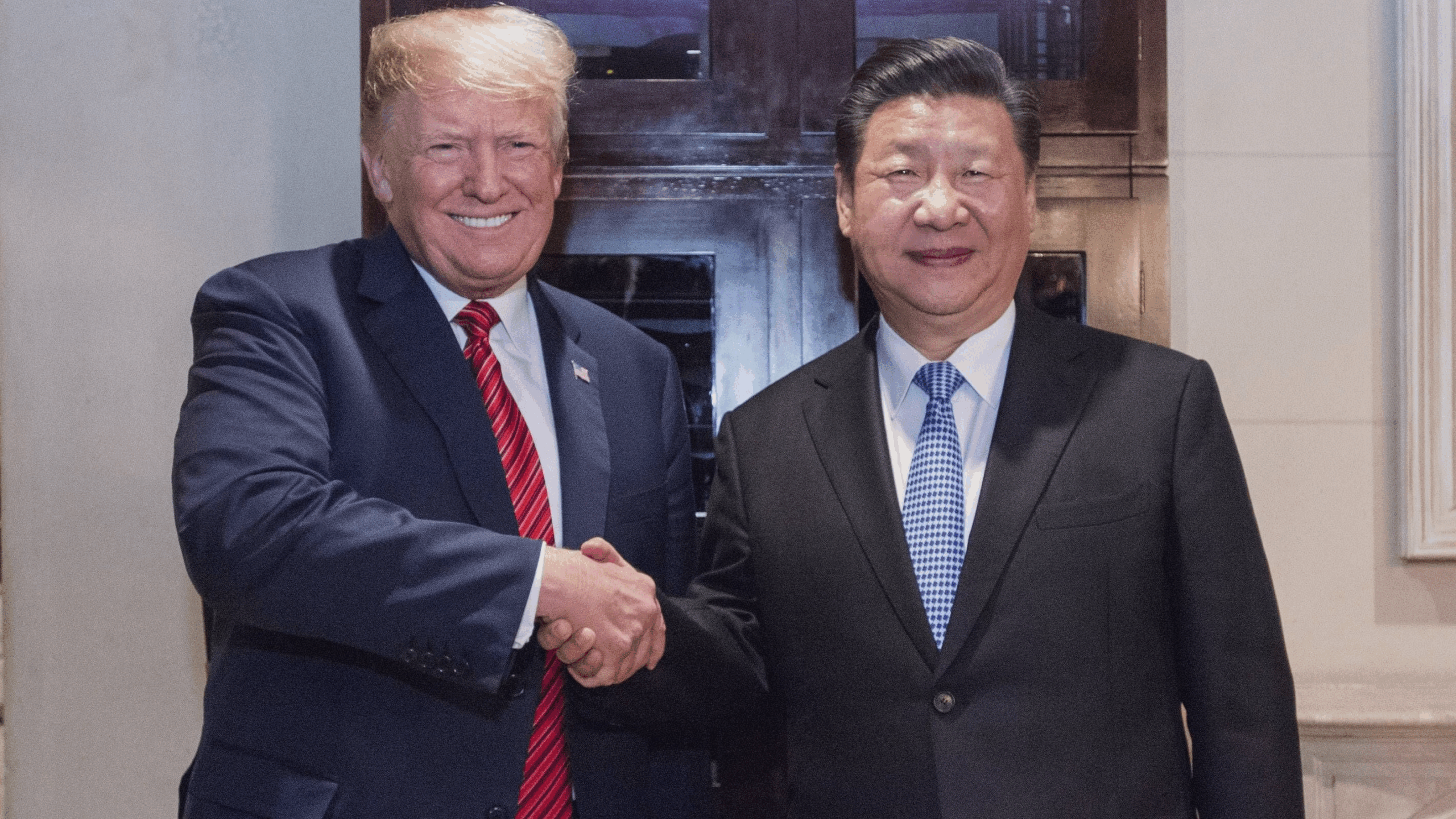
President Donald Trump departed for Asia on Saturday for his first major diplomatic mission of his second term as the government shutdown entered its 25th day with no resolution in sight to the budget crisis that has left hundreds of thousands of federal workers without paychecks. Trump is heading to the Kuala Lumpur Convention Center where he will participate in events at the ASEAN summit, a gathering of Southeast Asian leaders, before traveling to South Korea for the APEC Economic Leaders Meeting where he is scheduled to meet with Chinese President Xi Jinping.
The high-stakes diplomatic mission comes amid escalating trade tensions across multiple fronts. Trump said he was terminating trade talks with Canada in response to an anti-tariff ad released by the Ontario province government, plunging relations into fresh crisis. The abrupt decision shocked Canadian officials who had been attempting to negotiate modifications to existing trade agreements and sparked immediate market turbulence as investors worried about broader economic consequences.
Canada will focus on constructive discussions with America despite U.S. President Donald Trump’s latest threat to hike tariffs by 10%, the country’s US-Canada trade minister Dominic LeBlanc said. The minister stated that Canada stands ready to build on the progress made in constructive discussions with American counterparts over recent weeks, adding that progress is best achieved through direct engagement with the U.S. administration.
Trump said Friday he does not plan to meet with Canadian Prime Minister Mark Carney, just moments before departing the White House for his trip to Asia. When asked whether he intended to hold talks with Carney, who will also be in Asia, Trump replied that he had no plan to do so. The president later stated aboard Air Force One that he doesn’t think there’s much Canada can do to restart talks, demonstrating his hardline approach to trade negotiations that prioritizes American interests over diplomatic niceties.
Conservative trade policy experts argue that Trump’s willingness to terminate negotiations demonstrates strength rather than recklessness, showing foreign leaders that the United States will not tolerate disrespect or bad-faith negotiating tactics. The Ontario advertisement that triggered Trump’s decision featured references to former President Ronald Reagan and characterized tariffs as outdated protectionist policies harmful to economic growth, which the president viewed as inappropriate interference in American domestic political debates.
Trump said Saturday he held a very good phone call with Japan’s new hardline conservative prime minister Sanae Takaichi, describing her as very friendly and saying he looks forward to meeting her during his trip to Asia. The president told reporters aboard Air Force One that Takaichi was a very very close ally and friend of former Japanese Prime Minister Shinzo Abe, who was assassinated in 2022, adding that Abe was one of his favorites.
Takaichi, Japan’s first female prime minister, said in a social media post Saturday that Trump congratulated her on her new role. The warm relationship between Trump and Japan’s new conservative leadership stands in stark contrast to the deteriorating relations with Canada, demonstrating that the president rewards allies who share American values and support Trump’s agenda while punishing those who criticize his policies.
Senate Minority Leader Chuck Schumer says Senate Democrats will force votes on reversing tariffs on Canada and other countries next week. The New York Democrat stated that Americans cannot afford Donald Trump’s price-spiking tariff temper tantrums, adding that these constant tantrums end up costing Americans real money. Schumer argued that refusing to negotiate with Canada to alleviate the tariffs will ensure that Americans continue to pay an average of $1,300 due to higher prices on everything from lumber to beef.
Republicans dismiss Schumer’s calculations as politically motivated exaggerations designed to undermine Trump’s trade agenda. Conservative economists note that temporary price increases from tariffs pale in comparison to the long-term economic damage from allowing foreign countries to maintain unfair trade practices that destroy American manufacturing jobs and hollow out industrial communities. The Trump administration’s willingness to accept short-term economic pain to achieve better long-term trade deals reflects strategic thinking that prioritizes American workers over Wall Street profits.
As for another diplomatic flashpoint, three U.S. officials told CNN that Trump is considering plans to target cocaine facilities and drug trafficking routes inside Venezuela. The potential escalation of military operations beyond maritime interdiction represents a dramatic expansion of Trump’s counter-narcotics strategy, raising questions about whether the administration will seek congressional authorization for strikes on foreign territory.
The government shutdown’s continuation into its fourth week has created mounting pressure on both parties to find compromise. Hundreds of thousands of people are missing their first full paychecks of the government shutdown today as the impasse extends into another week. Federal workers facing financial hardship include transportation security officers, air traffic controllers, park rangers, and countless other employees deemed essential who must continue working without compensation.
Trump’s absence from Washington during the shutdown demonstrates his confidence that Democrats will ultimately bear political responsibility for blocking government funding. The president’s decision to proceed with major diplomatic initiatives rather than remaining in the capital to negotiate suggests he views the Asia trip as more important than resolving the budget crisis, reinforcing conservative arguments that Democrats could end the shutdown immediately by voting for Republican funding legislation.
Trump acknowledged that he’d authorized the CIA to conduct covert action in Venezuela and said the United States was considering strikes on Venezuelan territory. The president suggested some openness to informing Congress about future operations on land, stating that the U.S. is allowed to conduct such operations and if they move to land-based strikes, the administration may go back to Congress to explain exactly what they’re doing.
Trump defended the strikes on alleged drug trafficking boats, saying every one of those boats that gets knocked out is saving 25,000 American lives. The president’s justification for military action emphasizes the humanitarian cost of the fentanyl crisis killing hundreds of thousands of Americans annually, arguing that destroying narcotics shipments at sea prevents those drugs from reaching American communities.
The escalating confrontation with Venezuela and Colombia over counter-narcotics operations demonstrates Trump’s willingness to use military force unilaterally to protect American citizens from foreign threats. Conservative national security experts argue that Latin American governments have failed for decades to control drug trafficking organizations, justifying aggressive American intervention regardless of sovereignty concerns or international law constraints.
Trump’s White House construction project continued generating controversy during the shutdown. Trump defended his plans for a 55,000-square-foot ballroom, which he reiterated is paid for personally and through donors, stating it would cost about $300 million, which is higher than the originally projected $200 million price tag. The president defended the East Wing demolition, noting that after tremendous study with some of the best architects in the world, the administration determined that knocking it down rather than trying to use a little section made more sense architecturally.
Critics view Trump’s willingness to demolish historic structures during a government shutdown as demonstrating misplaced priorities while federal workers go without paychecks and essential services face disruption. However, administration defenders note that the ballroom is privately funded and that maintaining the White House as a functioning residence and ceremonial venue requires periodic renovations regardless of political circumstances.
The Asia trip carries enormous stakes for Trump’s foreign policy agenda and economic strategy. The scheduled meeting with Xi Jinping could determine whether U.S.-China relations stabilize or continue deteriorating toward potential military confrontation over Taiwan and trade disputes. Conservative China hawks argue that Trump must take a hardline approach that punishes Beijing’s economic aggression and military expansion, while moderates worry that excessive confrontation could trigger a global recession.
Analysis shows Americans seem to see through Trump’s legal retribution campaign against his perceived political foes, with polling suggesting voters distinguish between legitimate prosecutions of officials who violated laws and politically motivated investigations targeting critics. The Trump administration’s indictments of James Comey, John Bolton, and Letitia James have generated mixed public reactions, with Republicans viewing them as overdue accountability while Democrats characterize them as authoritarian persecution.
As Trump travels through Asia conducting high-level diplomacy while the government remains shuttered, the contrast between his foreign policy engagement and domestic political gridlock illustrates the fundamental challenges facing his second-term agenda. The president’s ability to negotiate favorable trade deals with China while simultaneously pressuring Canada and threatening military action in Venezuela demonstrates his unconventional approach to international relations that prioritizes American interests over traditional diplomatic protocols.
The question now facing Washington is whether Trump’s absence will allow congressional negotiators to craft a compromise that reopens the government, or whether the shutdown will extend even longer as both parties maintain their incompatible positions on healthcare subsidies and spending priorities. Senate Democrats’ plans to force votes on reversing Trump’s tariffs next week sets up another confrontation that could further polarize an already divided Congress struggling to perform basic governance functions.
As the shutdown enters its fourth week with Trump halfway around the world pursuing diplomatic objectives, federal workers and American families affected by suspended services face mounting hardship while political leaders in both parties show no signs of backing down from their core demands. The convergence of the budget crisis, trade tensions with multiple countries, and Trump’s aggressive counter-narcotics military operations creates a volatile environment where miscalculations could trigger serious economic or security consequences that neither party currently appears prepared to address through bipartisan cooperation.

Leave a comment