

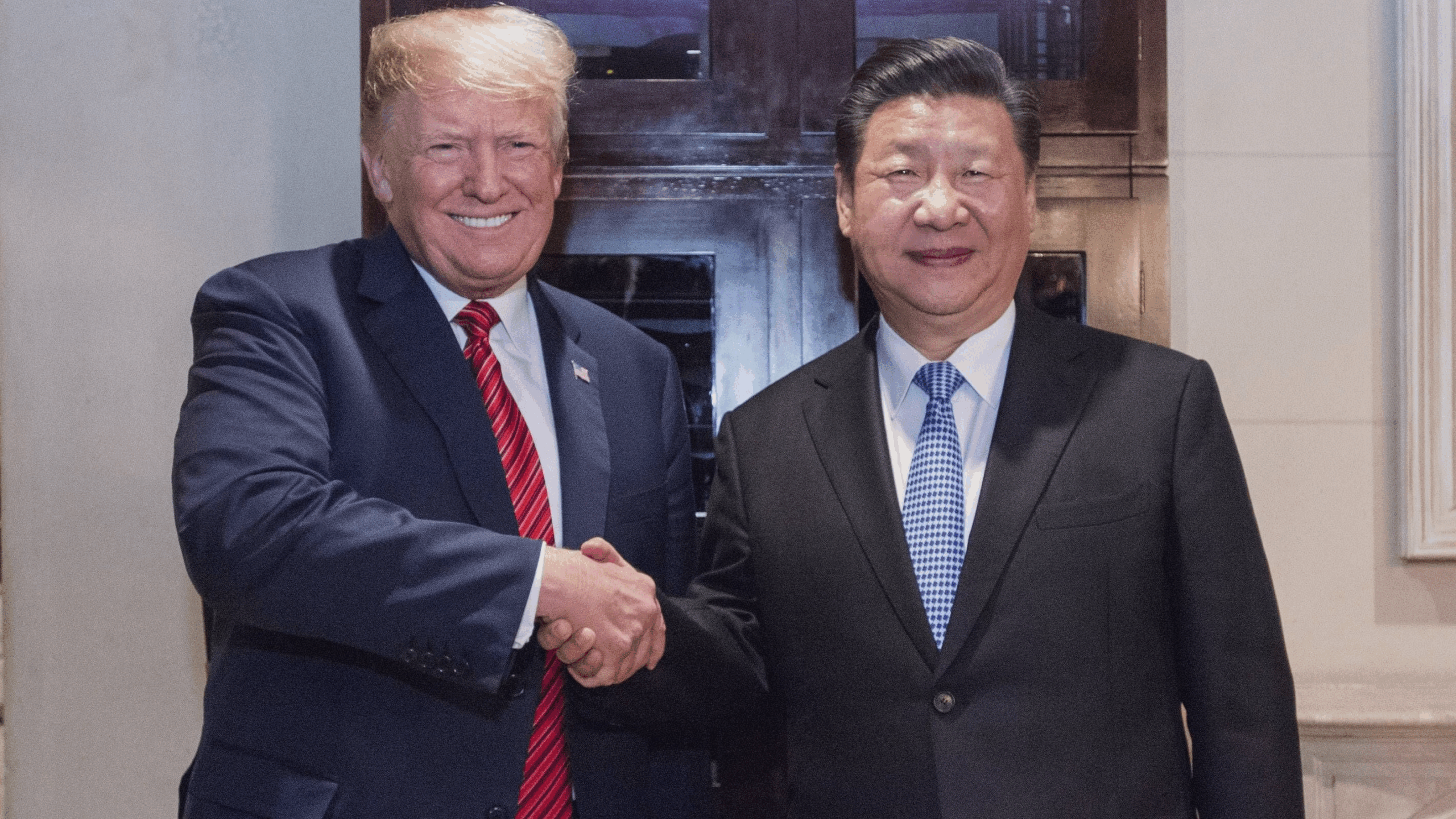
President Donald Trump expressed confidence Tuesday, October 29, 2025, that his upcoming meeting with Chinese President Xi Jinping in South Korea would produce a comprehensive trade deal as both nations projected optimism following weekend negotiations in Malaysia that established a framework for ending months of escalating tensions. Trump expressed hope for a grand deal between Washington and Beijing, stating he thinks there will be a deal that will be good for both countries and better than fighting and going through all sorts of problems with no reason for it.
At an APEC leaders’ working dinner, Trump said the bilateral meetings were tremendous and produced a pretty much finalized trade deal with South Korea. The agreement demonstrates Trump’s strategy of securing multiple bilateral deals throughout Asia rather than joining multilateral pacts that would constrain American negotiating leverage. The two countries announced a framework deal over the summer similar to the one signed earlier in the week with Japan, with 15% tariffs on South Korean goods and investments pledged in the U.S.
Trump and Xi are poised to hold a high-stakes summit in South Korea on Thursday, as the world’s two largest economies struggle to resolve a protracted trade conflict that has upended the global economy. The meeting carries enormous significance for Trump’s foreign policy agenda and domestic political standing, as successful negotiations would validate his unconventional approach to international relations that prioritizes American interests over diplomatic niceties.
The meeting will take place on the sidelines of the Asia-Pacific Economic Cooperation summit in Busan, South Korea, marking their first face-to-face meeting since Trump’s return to office. China’s state-run Xinhua news agency confirmed the summit through a Foreign Ministry spokesperson who stated that Xi and Trump will exchange views on bilateral relations and issues of mutual interest.
Trump said he expected the meeting with Xi to last for three or four hours, suggesting substantive discussions rather than merely symbolic photo opportunities. The extended duration reflects both leaders’ recognition that resolving trade tensions requires addressing multiple contentious issues including rare earth exports, fentanyl trafficking, agricultural purchases, and technology export controls.
Trump confidently said for days he would reach a trade deal with Xi, telling a lunch meeting of APEC business executives in Gyeongju that he thinks it will be a good deal for both and that’s better than fighting and going through all sorts of problems with no reason for it. The president’s optimistic tone marks a dramatic reversal from mid-October when he threatened 100% tariff increases after China expanded export restrictions on rare earth minerals.
Trump in mid-October had threatened to hike tariffs on Chinese goods by 100% starting November 1st over Beijing’s announcement of new export restrictions on rare earth minerals, and days later threatened to have the U.S. stop buying Chinese cooking oil in retaliation for China freezing soybean purchases. However, Treasury Secretary Scott Bessent stated Sunday that the U.S. and China had struck the framework of a trade agreement preventing the 100% tariff from taking effect.
The dramatic shift from threats to negotiations demonstrates Trump’s pattern of applying maximum pressure through aggressive rhetoric before pivoting to constructive engagement that produces concrete results. Conservative trade policy experts argue this approach, while creating short-term volatility, ultimately secures better deals than traditional diplomatic engagement that Beijing interprets as American weakness.
China restricted exports of five more rare-earth metals in October, and Trump threatened 100% tariffs again in retaliation, but this week seeking to diversify trade and supply chains, China strengthened a trade deal with the Association of Southeast Asian Nations while the U.S. drew up new trade agreements with Japan, Malaysia and Cambodia. The parallel diplomacy by both superpowers created opportunities for Southeast Asian nations to extract concessions from both Washington and Beijing.
In Japan, Trump and Prime Minister Sanae Takaichi had a photo spray with families of people who were abducted by North Korea, with about 20 people holding photos of their loved ones taken by North Korea. The president’s engagement with Japanese abductee families demonstrates his willingness to address humanitarian concerns alongside economic negotiations, though he indicated he has not yet spoken with Kim Jong Un about their situation.
Trump was asked by a reporter whether he plans to discuss the abducted people with the North Korean leader, but said he has not yet spoken to Kim, stating they’re going to see what’s going on as they’ve been so busy but will be discussing it. The president previously said he would love to see Kim and was open to extending his Asia trip to meet the North Korean dictator, though scheduling could not be arranged.
The government shutdown entered its 29th day Tuesday as Trump conducted diplomacy halfway around the world while congressional Democrats maintained demands for Affordable Care Act subsidy extensions before voting to reopen the government. The extended funding lapse created an unusual dynamic where the president pursues major foreign policy initiatives while domestic governance remains paralyzed by partisan gridlock over healthcare policy.
Canada’s prime minister Mark Carney was among a small group of world leaders who dined with Trump on Wednesday night at the APEC summit, with Trump telling reporters aboard Air Force One that they had a very nice conversation. However, Trump posted on social media that he didn’t come to South Korea to see Canada, and offered warm greetings and exchanged pleasantries with many other counterparts during a family photo of leaders but did not engage with Carney.
The chilly reception for Canada’s leader contrasts sharply with Trump’s warm relationship with Japan’s new conservative prime minister and demonstrates that the president rewards allies who share American values while punishing those who criticize his policies. Trump’s decision Saturday to terminate trade talks with Canada following Ontario’s anti-tariff advertisement has created fresh crisis in relations with America’s largest trading partner.
Trump used his APEC address to tout his domestic and foreign economic strategies, saying the tax cuts within the Big Beautiful Bill were a tremendous success for the return of manufacturing to America, and described himself as a president that cuts through the red tape and excuses. The president also celebrated Nvidia and TSMC for creating the first Blackwell AI Chip in the U.S., highlighting his administration’s success attracting advanced manufacturing investment.
Trump said he will visit China in April, and Xi would visit the U.S. sometime after that, whether in Florida, Palm Beach or Washington DC. The commitment to reciprocal visits suggests both leaders view the relationship as requiring sustained engagement rather than episodic crisis management, though skeptics note that Beijing made similar commitments during Trump’s first term before relations deteriorated.
Trump was awarded South Korea’s highest civilian honor, the Grand Order of Mugunghwa, and presented with a replica of a historical golden crown at the Gyeongju National Museum. The lavish honors demonstrate Asian leaders’ recognition that flattery and hospitality remain effective tools for securing favorable treatment from Trump, who responds positively to public displays of respect and appreciation.
The significance of the Busan meeting is that the two sides sent a clear signal that they will work to manage relations and not let them spiral downward, with a calendar of continuing high-level meetings agreed to and a series of lower-level official engagements planned on issues such as military-to-military relations, trade and investment, and law enforcement cooperation. This structured engagement represents progress compared to the deteriorating relations that characterized the Biden administration’s final year.
According to experts, they expect a truce in strained ties with photo opportunities rather than any grand bargain, with both sides likely to announce small wins including a delay on tariffs, a joint statement on trade stability, and maybe a working group on critical minerals cooperation. The modest expectations reflect recognition that fundamental differences between American and Chinese systems prevent comprehensive resolution of all disputes through a single summit.
The truce reached between the U.S. and China is not a comprehensive deal, with former U.S. ambassador to China Nicholas Burns cautioning that many important questions remain unanswered. Burns noted that Chinese soybean purchases are roughly equivalent to past years, China’s crackdown on fentanyl exports has long been promised, and the TikTok sale was not complete despite months of work.
Piper Sandler analysts told clients that Xi was ready for Trump in his second term and has a powerful weapon in rare earths, arguing that China is getting the better of the US in these recent truce negotiations. The assessment reflects concerns among China hawks that Trump’s eagerness for deals leads him to accept superficial concessions rather than demanding structural changes to Chinese economic practices.
However, administration defenders argue that incremental progress through bilateral negotiations serves American interests better than maximalist demands that Beijing would reject, leading to prolonged confrontation damaging both economies. The pragmatic approach recognizes that complete decoupling from China would harm American businesses and consumers more than Beijing while failing to achieve strategic objectives.
As Thursday’s summit approaches, the convergence of trade deal optimism with Trump’s broader Asia trip successes creates potential for the president to claim major foreign policy victories that could strengthen his domestic political position despite the ongoing government shutdown. Conservative strategists calculate that successful trade negotiations with China combined with framework agreements throughout Southeast Asia will vindicate Trump’s unconventional approach to international relations.
The question now facing Washington is whether Thursday’s Trump-Xi summit will deliver sufficient substance to justify the optimistic rhetoric or whether investors and voters are getting ahead of themselves by assuming agreements will materialize as advertised. The relatively short duration of the meeting compared to the complexity of issues under discussion suggests that detailed negotiations occur at lower levels with the leaders primarily serving to bless frameworks already established by their trade representatives.

Leave a comment