

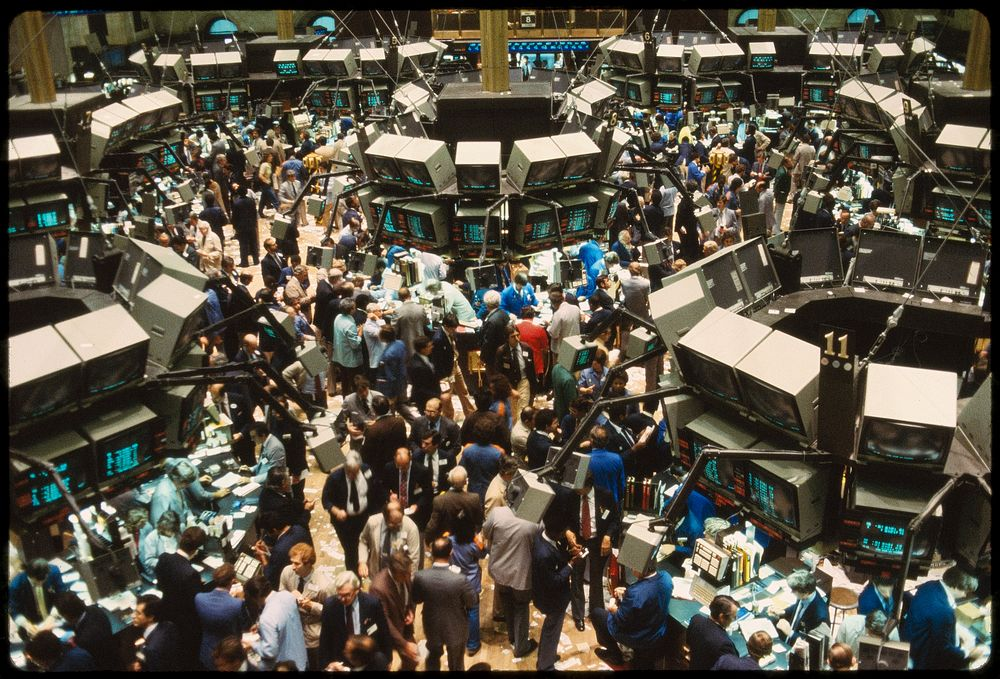
Wall Street experienced extreme intraday volatility Friday, November 14, with major indexes plunging more than 1% at the open before recovering most losses by the closing bell as dip-buyers emerged to prevent what could have been the market’s worst week since the April tariff meltdown. After starting Friday with a sharp drop of 1.3%, the S&P 500 erased all of it before ending with a slight dip of 0.1%, falling 3.38 points to 6,734.11.
The Nasdaq composite flipped to a gain of 0.1%, rising 30.23 points to 22,900.59, while the Dow Jones Industrial Average trimmed its loss to 309 points after earlier being down nearly 600. The dramatic intraday reversal demonstrates that investors remain willing to buy technology stocks despite warnings from major investment bank CEOs that a 10% to 20% correction appears inevitable.
AI stocks once again were at the center of the action, with Nvidia beginning the day with a steep loss, only to erase it, and yanking the market in its wake. The semiconductor giant’s ability to recover from early selling pressure provided validation for bulls who argue that artificial intelligence remains a transformative technology rather than speculative excess, though skeptics note that the violent intraday swings demonstrate dangerous levels of volatility.
The S&P 500 is on pace to suffer its sharpest November decline since 2008, with the index having declined over 1.2% month to date due to festering concerns about the economy and stock market valuations. That disappointing start puts the benchmark on pace for its worst November since the Great Recession, though conservative investors recognize that comparisons to 2008 remain premature given that corporate earnings continue exceeding analyst expectations despite elevated costs and uncertain demand.
Goldman Sachs estimates that U.S. companies and consumers will collectively pay 77% of tariffs by the end of 2025, with consumers alone bearing more than 50% of the burden. The White House reportedly plans to eliminate duties on certain produce and textiles to ease prices, representing a tacit admission that Americans are paying Trump’s tariffs rather than foreign exporters absorbing the costs as the president repeatedly claimed.
The University of Michigan Index of Consumer Sentiment measured 50.3 in November, the second lowest reading in history. Investors interpreted the consumer confidence collapse as very bad news because consumer spending is the primary engine that drives GDP growth. The combination of tariff-induced inflation and the recently ended government shutdown has created perfect storm of economic uncertainty that threatens holiday retail sales.
In late October, the S&P 500 achieved a forward price-to-earnings multiple above 23, something that has happened only once in the last 25 years. The extreme valuation levels create vulnerability if earnings growth disappoints or if Federal Reserve officials signal that December rate cuts are unlikely given persistent inflation pressures. Conservative strategists note that markets trading at dotcom-era valuations typically end badly for momentum chasers.
Consumer discretionary stocks have lagged this week and month, with the S&P 500 sector slipping more than 2% week to date, making it the worst performing of the 11 that comprise the broad index. The sector is now down more than 3% for November, on pace to snap a six-month winning streak, suggesting that consumer spending weakness extends beyond federal workers affected by the shutdown.
Williams-Sonoma led the sector down this week with a drop of more than 6%, followed by Aptiv and Tesla’s slides of around 5% each, demonstrating that even premium consumer brands face traffic challenges when middle-class consumers tighten budgets. Nike and AutoZone have helped curtail losses, jumping more than 5% and 3%, respectively, suggesting that stock selection remains crucial even during broad sector weakness.
Major U.S. companies are mentioning tariffs less on their earnings calls according to a FactSet analysis, with those two terms cited on 238 calls over the period, a quarter-over-quarter decline of 33% compared to the second quarter of 2025. The reduced tariff mentions suggest companies have either adapted to the new trade environment or grown more cautious about highlighting cost pressures that could alarm investors.
Meta shares are down 23% since hitting a record high in mid-August, Nvidia shares are down 10% since hitting a record high in late October, and Palantir shares are down 16% since hitting a record high on November 3, demonstrating that even the most popular artificial intelligence names remain vulnerable to sharp declines when sentiment turns negative.
What’s happened recently in the market isn’t even close to a tech wreck, but it may be a bit of a tech reckoning, said Daniel Skelly, head of Morgan Stanley’s Wealth Management Market Research & Strategy Team. The assessment reflects growing recognition that AI-exposed stocks trading at unprecedented multiples face elevated risk if upcoming earnings reports fail to demonstrate that massive capital expenditures are translating into proportional revenue growth.
This month has been defined by investors rotating out of tech stocks and into other sectors, with the recent pullback feeling like investors trying to protect profits after a really healthy run off the lows in April, said Garrett Melson, portfolio strategist at Natixis Investment Managers Solutions. The profit-taking interpretation suggests recent weakness represents rational portfolio management rather than loss of confidence in technology sector fundamentals.
Bitcoin slid 4% on Friday and hovered around $94,500, with the cryptocurrency having tumbled 25% since it hit a record high in early October. The digital asset’s sharp decline alongside equity market weakness demonstrates that cryptocurrency continues behaving as high-beta technology proxy rather than safe-haven alternative to traditional assets, validating skeptics who argue Bitcoin has failed to achieve its aspiration as digital gold.
Wall Street and the Fed are awaiting a deluge of economic data that was delayed due to the shutdown, which is contributing to mounting nerves about the Fed’s next move, with traders on Friday pricing a 46% chance the central bank will cut rates in December, down from a 96% chance one month ago. The dramatic shift in expectations reflects growing uncertainty about whether inflation pressures have moderated sufficiently to justify additional monetary accommodation.
The question facing investors as November’s third week begins is whether Friday’s recovery from early lows represents genuine buying conviction or merely short-covering that could reverse quickly if additional negative catalysts emerge. Conservative strategists note that markets capable of violent intraday swings in both directions suggest unstable foundations rather than the steady accumulation that characterizes sustainable bull markets.
Friday’s action demonstrated that despite stretched valuations and deteriorating consumer confidence, buyers remain willing to emerge when stocks decline to levels deemed attractive. The S&P 500’s ability to hold above 6,700 provides technical support that could prevent more serious correction if the level holds during future tests. However, failure to defend this support would likely trigger additional selling as momentum traders liquidate positions and risk management systems force institutional investors to reduce exposure.
As markets prepare for Nvidia earnings Wednesday and the delayed September jobs report next week, the convergence of key fundamental data releases with ongoing Federal Reserve uncertainty creates potential for either powerful year-end rally if results exceed expectations or accelerated decline if reality disappoints compared to optimistic consensus forecasts. Conservative portfolio managers who maintained discipline rather than chasing momentum should find numerous opportunities to add exposure if the correction extends, while those fully invested face difficult decisions about whether recent volatility represents noise within an ongoing bull market or early warning signs of more serious trouble ahead.

Leave a comment