

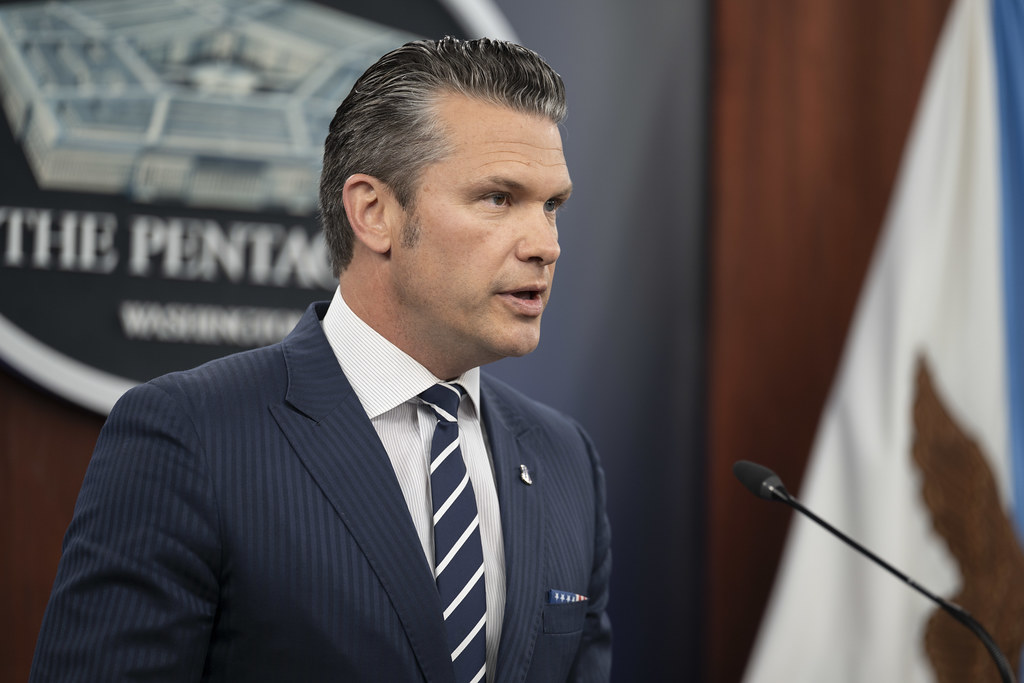
President Donald Trump announced, Monday, that the United States will carry out military strikes inside Venezuelan territory “soon” while simultaneously denying knowledge of the controversial September 2 follow-up attack on a drug boat that killed two survivors clinging to wreckage in the Caribbean Sea. Speaking at a Cabinet meeting, the president also said he and Defense Secretary Pete Hegseth did not know about a second strike on an alleged drug boat in the Caribbean.
The stunning reversal contradicts multiple Pentagon officials with direct knowledge who confirmed to major news organizations that Hegseth issued verbal orders to “kill everybody” aboard the vessel, prompting a follow-up strike specifically targeting survivors unable to threaten American forces. The White House is defending the Pentagon over allegations it carried out war crimes during an attack on an alleged drug boat in the Caribbean, though the defense strategy now centers on placing responsibility on Admiral Frank “Mitch” Bradley rather than the Defense Secretary.
Last week, The Washington Post reported U.S. forces sank a vessel with 11 people aboard during a September 2 strike, then launched a second strike to kill two survivors as they clung to the smoldering wreckage of their ship. On Monday, the White House confirmed the second strike occurred, but claimed the order to kill the survivors of the initial attack came not from Defense Secretary Pete Hegseth as The Washington Post reported, but from Admiral Frank “Mitch” Bradley, who at the time was the head of JSOC, the Joint Special Operations Command.
The decision to throw Bradley under the bus represents classic Trump administration pattern of deflecting accountability onto subordinates when controversies threaten political damage. Conservative legal scholars note that even if Bradley issued the tactical order, he would have been implementing Hegseth’s broader directive to ensure no survivors escaped the initial strike, making the Defense Secretary ultimately responsible regardless of who pressed the trigger.
Senator Mark Warner, Vice Chairman of the Senate Intelligence Committee, expressed deep skepticism about the administration’s evolving explanations. “I don’t have a lot of faith in Secretary Hegseth. You know, we know he was bragging about the fact that he watched real time. This is happening September 2, and if there’s no problem there, why not release the unedited video?” said Warner.
Trump’s promise of imminent strikes inside Venezuela represents dramatic escalation from maritime interdictions to ground operations on foreign soil without congressional authorization or international legal justification. The president has repeatedly designated Venezuelan drug cartels as foreign terrorist organizations, claiming this designation provides authority to conduct military operations targeting facilities producing narcotics destined for American markets.
The Minneapolis Mayor Jacob Frey held a news conference addressing Trump administration reports that Somali immigrants will be targeted for deportation in the Twin Cities. Minneapolis Mayor Jacob Frey said the city is “proud to be home to the largest Somali community in the country.” He also asserted that Minneapolis does not work with ICE, creating another flashpoint between Democratic urban leaders and Trump’s immigration enforcement agenda.
The boat strike controversy continues generating bipartisan concern despite White House attempts to reframe the narrative. Republican Senator Roger Wicker indicated during interviews that he expects to receive audio and video recordings of the September 2 operation during classified briefings, suggesting GOP oversight will not simply accept administration explanations at face value.
The White House on Monday said a U.S. attack on an alleged drug boat in September included more than one strike on the vessel, seemingly confirming a Washington Post report that the U.S. targeted the boat for a second time to take out survivors of the initial attack. The acknowledgment that multiple strikes occurred represents retreat from earlier categorical denials that any follow-up attack took place.
By the way, good news on the wounded staff sergeant who survived the shooting. West Virginia’s governor says Andrew Wolfe’s condition has improved from critical to serious, and he is responsive. The National Guard shooting that prompted Trump to pause all asylum decisions created additional political pressure to demonstrate toughness on immigration enforcement and border security.
Senator Chuck Schumer’s offices received bomb threats referenced by the subject line “MAGA” and email addresses alleging the 2020 election was rigged. Schumer says the bomb threats against his offices came with the email subject line MAGA and from an email address alleging the 2020 election was rigged. Law enforcement responded immediately to locations in Rochester, Binghamton, and Long Island, with everyone remaining safe despite the threats.
The question facing Washington is whether congressional oversight will uncover evidence definitively linking Hegseth to orders targeting survivors or whether the Defense Secretary’s denials combined with scapegoating Bradley will prove sufficient to deflect accountability. Conservative institutionalists privately acknowledge that follow-up strikes against incapacitated survivors represent indefensible conduct regardless of Trump’s legitimate frustration with ineffective counter-narcotics efforts.
Trump’s promise of strikes inside Venezuela without specifying legal authorization or strategic objectives suggests the administration views expanded military operations as politically beneficial regardless of international law constraints or congressional war powers. The president’s transactional approach to foreign policy prioritizes demonstrating strength over adhering to constitutional procedures requiring legislative approval for offensive military action.
As Senate committees prepare for classified briefings including audio and video evidence from the September 2 operation, the convergence of war crime allegations with Trump’s promise of Venezuelan strikes creates perilous moment where the administration’s counter-narcotics strategy faces bipartisan scrutiny that could constrain future operations. The precedent established by these strikes could haunt American military personnel for decades if hostile nations cite Trump administration tactics to justify their own extrajudicial killings during future conflicts.

Leave a comment