


Gold’s spectacular single-day 5% plunge on October 22, 2025, represented the precious metal’s steepest decline since 2020 and exposed the speculative excess that drove prices to record highs above $4,300 per ounce during the government shutdown crisis. Conservative investors who avoided chasing gold’s parabolic rally have been vindicated as the metal collapsed from peak levels, surrendering gains accumulated during months of geopolitical tension and fiscal uncertainty that temporarily drove safe-haven demand to unsustainable levels.
The yellow metal currently trades around $3,900 per ounce, down approximately 9% from October peaks but still elevated relative to historical averages adjusted for inflation. Conservative precious metals investors should recognize that gold’s failure to maintain gains following brief crisis periods validates skepticism about whether the ancient store of value retains relevance in modern financial system dominated by digital alternatives and central bank manipulation.
Peace dividends destroy geopolitical risk premiums
President Trump’s successful brokering of the Israel-Hamas ceasefire in October eliminated the primary geopolitical catalyst that had driven gold to record highs as investors hedged against Middle East war escalation. The rapid transition from imminent regional conflict to negotiated peace agreement demonstrated how quickly geopolitical risk premiums can evaporate, leaving investors who purchased gold near peaks suffering immediate losses as safe-haven demand disappeared.
The ceasefire’s durability through December despite occasional violations has convinced markets that major escalation remains unlikely, removing the war premium that added hundreds of dollars to gold prices during September and early October. Conservative investors should recognize that geopolitical events create temporary dislocations rather than permanent shifts in supply-demand fundamentals, making crisis-driven rallies opportunities to reduce exposure rather than initiate positions.
Trump’s broader Middle East peace efforts including normalization agreements between Israel and Saudi Arabia threaten to eliminate the region as primary source of geopolitical uncertainty that historically supported gold prices. The president’s transactional approach prioritizes economic development and energy cooperation over ideological conflicts, creating environment where rational actors pursue prosperity rather than perpetual confrontation that generates safe-haven flows into precious metals.
Conservative geopolitical analysts note that the only major conflict remaining unresolved involves Ukraine, where Trump administration negotiators have made substantial progress toward settlement that would freeze current battle lines while establishing security guarantees preventing Russian expansion. The potential resolution of both Middle East and European conflicts would eliminate the geopolitical risk premiums that justify gold allocations based on war hedging rather than monetary debasement concerns.
Dollar strength and rising yields create headwinds
The strengthening U.S. dollar that accompanied gold’s October crash demonstrates the inverse relationship between greenback value and precious metals prices. Gold trades in dollars globally, meaning that currency appreciation makes the metal more expensive for foreign buyers while reducing appeal for American investors who can earn attractive real returns from dollar-denominated assets without accepting gold’s zero-yield characteristics.
Treasury bonds yielding 4.3% create opportunity cost for gold holdings that generate no income while requiring storage and insurance costs. An investor holding $100,000 of gold earns zero return while bearing risks of theft, damage, or confiscation, whereas equivalent Treasury allocation generates $4,300 annually in risk-free interest plus potential capital appreciation if yields decline further.
The Federal Reserve’s hawkish pivot during late 2025, projecting only one additional rate cut in 2026 rather than the aggressive easing cycle markets anticipated, creates sustained headwinds for gold as higher real yields make income-producing alternatives more attractive. Conservative investors should recognize that gold performs best during negative real yield environments when bonds guarantee purchasing power losses, but struggles when positive real yields make fixed income compelling.
The dollar’s strength reflects confidence in American economic resilience despite government shutdown disruptions and ongoing political uncertainties. Foreign investors seeking safe havens increasingly favor dollar-denominated assets over gold that lacks the liquidity and convenience of currency holdings. The structural bid for dollars from international trade settlement and reserve accumulation creates persistent headwind for gold absent extraordinary monetary debasement or dollar confidence crisis.
Central bank buying plateaus after record 2024 accumulation
Central banks’ record gold purchases during 2024 represented one-time adjustment as institutions diversified reserves away from dollar and euro assets following Western sanctions against Russia that demonstrated sovereign reserves’ vulnerability to political seizure. However, the buying surge has plateaued during 2025 as central banks recognize limits to practical gold holdings given storage, security, and liquidity constraints that make the metal inferior to diversified currency reserves.
China’s gold buying that drove prices higher throughout 2024 moderated substantially during 2025 as the People’s Bank of China approached self-imposed limits on precious metals as reserve percentage. The institution’s shift toward accumulating other reserve assets including Japanese yen and commodity-backed securities demonstrates that even gold-friendly central banks recognize the metal’s limitations as primary reserve holding.
Conservative precious metals analysts note that the 2024 central bank buying represented catch-up purchases after decades of neglect rather than beginning of sustained accumulation that would support permanently higher prices. The one-time adjustment has largely concluded, eliminating the incremental demand that drove gold from $2,000 to over $4,000 during the 18-month rally that peaked in October 2025.
The plateau in central bank buying removes the primary fundamental support for elevated gold prices, leaving the metal dependent on private investment demand that remains tepid given attractive alternatives in bonds yielding real positive returns. Conservative investors should recognize that gold requires continuous incremental demand to maintain prices given that annual mining production adds approximately 2% to above-ground stocks, creating persistent supply pressure absent offsetting demand growth.
Mining sector valuation premium unsustainable at current prices
Gold mining stocks that soared during the metal’s rally to $4,300 have declined more sharply than bullion itself, with major producers including Newmont, Barrick Gold, and Kinross trading 15% to 25% below October peaks. The sector’s underperformance relative to physical gold demonstrates that equity investors recognize elevated risks in mining operations whose profitability depends on sustaining prices near record levels.
All-in sustaining costs for major producers approximate $1,400 to $1,600 per ounce, meaning current gold prices around $3,900 generate substantial margins supporting premium valuations. However, conservative mining analysts caution that cost inflation from labor, energy, and equipment has accelerated during 2025, threatening margins if gold prices decline further while input costs continue rising.
The geopolitical risks that drove gold higher paradoxically threaten mining operations concentrated in unstable jurisdictions. Major deposits in West Africa, South America, and Central Asia face nationalization risks, environmental opposition, and community conflicts that can shut operations with minimal notice. The concentration of low-cost production in politically unstable regions creates asymmetric risk where gold price appreciation provides limited upside while operational disruptions generate catastrophic losses.
Conservative investors seeking precious metals exposure should recognize that physical gold held in secure vaults provides simpler risk profile than mining stocks that combine commodity price exposure with operational, political, and management risks that have destroyed shareholder value repeatedly throughout history. The modest additional returns that successful miners generate rarely compensate for elevated risks compared to owning bullion directly.
Silver’s industrial demand vulnerability
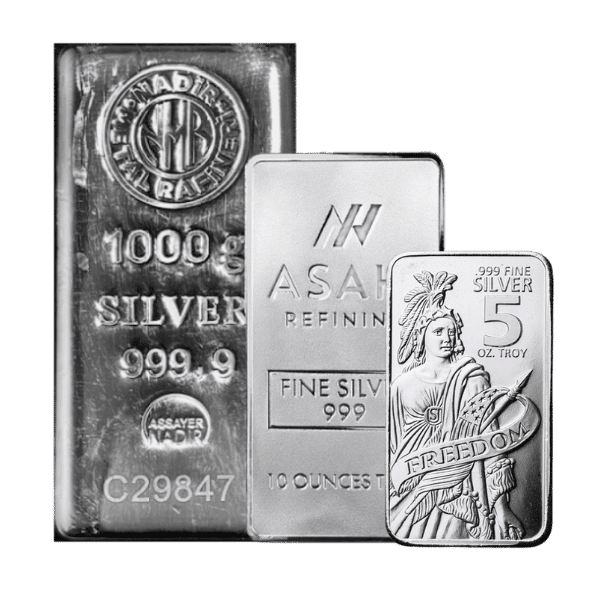
Silver’s dual role as precious metal and industrial commodity creates unique vulnerabilities as economic growth concerns mount heading into 2026. The metal’s price collapsed more severely than gold during November’s equity market selloff, declining 8% while gold fell only 3%, demonstrating that industrial demand destruction during recessions overwhelms silver’s monetary characteristics.
Approximately 50% of silver demand stems from industrial applications including solar panels, electronics, and medical equipment whose consumption correlates with economic growth rather than safe-haven seeking. The combination of industrial demand destruction during recessions with safe-haven demand that flows toward gold rather than silver creates particularly challenging environment for the white metal during economic contractions.
Conservative precious metals investors should recognize that silver’s higher volatility and industrial demand vulnerability make it unsuitable for portfolios prioritizing capital preservation. The metal’s occasional outperformance during precious metals rallies attracts speculators seeking leverage to gold price movements, but disciplined investors focused on wealth protection should avoid silver’s elevated risks.
The gold-to-silver ratio currently trades around 85 ounces of silver per ounce of gold, elevated relative to historical averages near 60 but not extreme by recent standards. Conservative analysts note that ratio mean reversion provides unreliable timing signal given that structural changes in monetary systems and industrial demand have altered historical relationships, making reliance on ratio trading strategies increasingly dubious.
Alternative commodities offer superior risk-reward profiles
Conservative investors seeking inflation protection and portfolio diversification should consider alternative commodities whose supply-demand fundamentals support prices more sustainably than gold’s dependence on monetary debasement fears that materialize sporadically. Energy commodities including crude oil, natural gas, and refined products benefit from structural supply constraints while demand remains resilient, creating more predictable return profiles than precious metals driven primarily by sentiment.
Agricultural commodities provide genuine inflation hedging as food price increases directly impact consumer price indices while production faces constraints from weather, disease, and geopolitical disruptions limiting supply flexibility. The combination of inelastic demand and supply volatility creates price dynamics more favorable for investors than gold’s zero-sum speculation about monetary policy and geopolitical risks.
Industrial metals including copper, aluminum, and steel offer exposure to global economic growth and infrastructure investment without the speculative excesses that periodically inflate gold prices to unsustainable levels. The metals’ essential roles in construction, manufacturing, and energy transition create demand floors that precious metals lack, making valuations more anchored to fundamental supply-demand balance rather than sentiment.
TradersPost enables automated trading bots for stocks, crypto, options, and futures, integrating seamlessly with strategies from TradingView and TrendSpider. For investors determined to maintain commodity exposure despite challenging fundamentals, systematic strategies that implement disciplined entry and exit rules prove superior to discretionary trading that typically produces poor results. Use code REDPULSE for 20% off at traderspost.io to implement rules-based approaches that remove emotion from commodity allocation decisions.
However, conservative financial advisors typically recommend limiting total commodity exposure to 5% of portfolios given the asset class’s zero income generation and dependence on price appreciation for returns. The diversification benefits that commodities theoretically provide rarely justify accepting the elevated volatility and negative expected real returns that characterize most commodity indices over extended periods.
Implementation guidance for conservative investors
Conservative investors who maintained gold allocations through October’s peak should use current elevated prices as opportunity to reduce exposure toward more modest 3% to 5% portfolio weightings appropriate for insurance against tail risks rather than core holdings expecting appreciation. The discipline to sell appreciated assets regardless of narrative momentum separates investors who preserve gains from those who ride rallies back to starting points.
Physical gold held in allocated storage accounts provides simplest implementation avoiding counterparty risks inherent in ETFs, mining stocks, or futures contracts. The storage and insurance costs averaging 0.3% to 0.5% annually remain modest compared to potential losses from leverage, operational risks, or counterparty defaults that periodically devastate alternatives to direct bullion ownership.
Conservative portfolio construction suggests maintaining small gold positions as insurance against extreme monetary debasement or dollar confidence crisis while recognizing that base case scenarios favor traditional assets generating cash flows and income. The asymmetric payoff structure where gold provides modest returns during normal environments but potentially protects wealth during currency crises justifies small allocations despite negative expected returns over typical investment horizons.
The convergence of peace dividends, dollar strength, central bank buying plateau, and attractive alternative investments creates challenging environment for gold prices that conservative investors should respond to by reducing rather than increasing exposures. The metal’s October crash provided preview of how quickly speculative positions can unwind when catalysts supporting elevated prices disappear, validating defensive positioning over aggressive accumulation during crisis-driven rallies.
Redpulse Pro is built for readers who want to go deeper into the stories that shape finance, politics, and power. While our free content keeps you informed, Pro gives you the tools, insights, and access to stay ahead of the curve. With our Pro subscription, you follow the money, uncover hidden connections, and get the inside track on the narratives mainstream media won’t touch. Learn more at https://redpulse.com/buy/pro.

Leave a comment