

The final trading session of 2025 delivered a fitting conclusion to one of the most volatile years for bonds in recent memory, with Treasury yields reversing course Wednesday morning and climbing sharply higher after initial jobless claims data came in stronger than expected. The 10-year Treasury yield rose more than 3 basis points to finish at 4.163%, while the 2-year Treasury climbed more than 2 basis points to 3.475%, extending a pattern of choppy trading that has characterized fixed income markets throughout a year dominated by conflicting signals about inflation, growth, and Federal Reserve policy intentions. Despite Wednesday’s spike, the 10-year yield ended 2025 lower than it began the year, having started 2025 above 4.5% before experiencing wild swings that took it as low as 4.045% following Trump’s April tariff announcement and back above 4.5% a week later when he temporarily dropped rates to 10% for most countries.
Initial jobless claims for the week ended December 27 came in at 199,000, down 16,000 from the previous week’s upwardly revised level of 215,000 and below the 220,000 that economists polled by Dow Jones had estimated. The stronger-than-expected labor market data reversed earlier Treasury gains and pushed yields higher as bond traders interpreted the numbers as reducing urgency for aggressive Federal Reserve rate cuts in 2026. The filings for first-time jobless benefits remain volatile during holidays and adverse winter weather, but the lack of any material weakness in the jobs market is striking given predictions earlier in 2025 that the labor market would soften substantially as the Fed maintained restrictive monetary policy.
The swing upward in yields following Wednesday’s jobs report captures what has been another brutally choppy year for the bond market, driven by factors including uncertainty surrounding President Trump’s tariff policy impact and the Federal Reserve’s interest rate trajectory. After finishing 2024 above the 4.5% level, the 10-year Treasury yield experienced a roller coaster ride through 2025 that left bond investors nursing losses even as equity markets posted strong gains. In the later third of the year, the benchmark yield oscillated around 4% as the Fed issued its first of three rate cuts in September, but inflation remained stubbornly above 2% while signs of labor market weakness developed unevenly across sectors.
The Federal Reserve’s December meeting, for which minutes were released Tuesday afternoon, concluded with a vote to lower interest rates that appeared to be an even closer call than the final 9-3 vote indicated. The minutes revealed deep divisions within the Federal Open Market Committee, with officials debating whether to prioritize supporting the labor market against concerns over persistently elevated inflation. The Fed cut rates by 25 basis points to a 3.5%-3.75% range, marking the third reduction of 2025 following 100 basis points of cuts in 2024 that brought the benchmark lending rate down from its recent cycle peak.
Most participants judged that further downward adjustments to the federal funds rate would likely be appropriate if inflation declined over time as expected, according to the minutes. However, significant misgivings emerged about how aggressive the FOMC should be moving forward. Some participants suggested that under their economic outlooks, it would likely be appropriate to keep the target range unchanged for some time after the December lowering, revealing a faction within the committee that believes rates have already been cut too much given current inflation readings. This internal division creates substantial uncertainty about the path of monetary policy in 2026 and makes bond market positioning extremely challenging.
The divided Fed and conflicting economic signals have created an environment where Treasury securities face pressure from multiple directions simultaneously. If inflation remains elevated or reaccelerates, longer-dated bonds will suffer as investors demand higher yields to compensate for erosion of purchasing power. If economic growth slows more dramatically than currently anticipated, shorter-dated bonds may rally while longer bonds face less clear direction depending on whether the Fed responds with aggressive cuts or maintains a cautious stance. The result is a bond market that lacks the clear directional conviction that characterized previous cycles and makes traditional buy-and-hold strategies less effective.
Market participants currently show 59.3% probability of the first 2026 rate cut occurring in April according to CME FedWatch interest rate derivatives, with expectations for two additional 25 basis point reductions during the year. This market pricing implies the fed funds rate will end 2026 somewhere in the 2.75%-3.00% range, representing 100 basis points of additional easing beyond the 175 basis points already delivered since the cutting cycle began. However, this forecast depends on inflation continuing to moderate and the labor market showing clearer signs of weakness, neither of which is guaranteed given Wednesday’s strong jobless claims data and persistent inflation readings in services sectors.
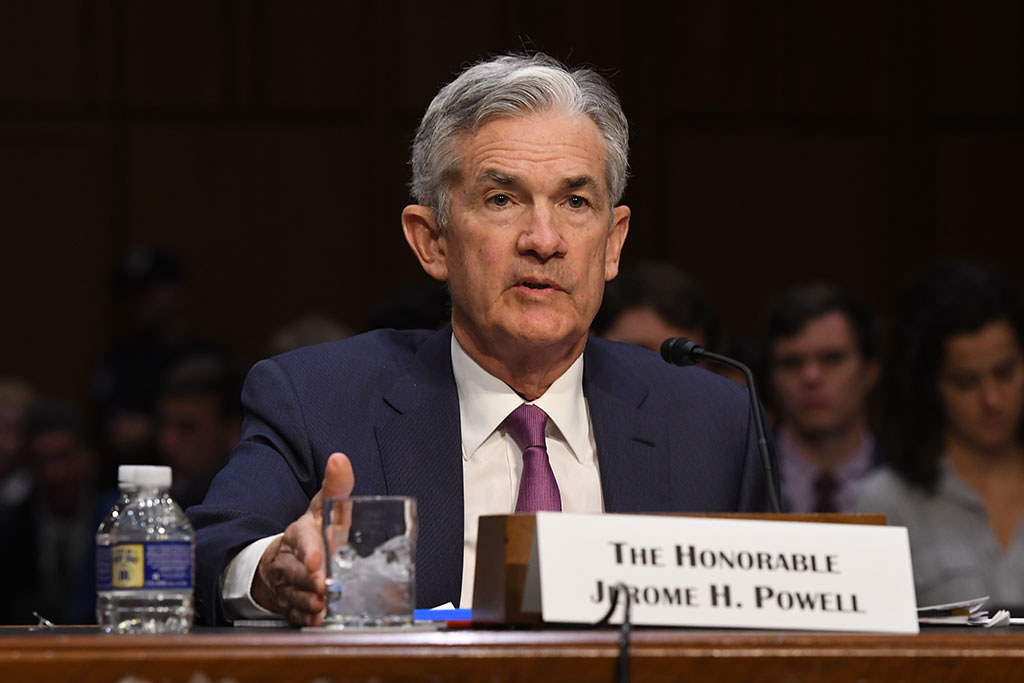
The appointment of the next Fed Chair represents another major source of uncertainty hanging over bond markets heading into 2026. President Trump is expected to announce Jerome Powell’s successor early in the new year when Powell’s current term expires, and the selection will send important signals about the administration’s priorities regarding inflation versus growth. A dovish pick would likely be interpreted as favoring continued rate cuts and could push longer-dated Treasury yields lower, while a hawkish selection focused on price stability might drive yields higher as markets price in a more restrictive policy stance. Political considerations will inevitably influence the choice, creating another variable that makes bond market forecasting particularly treacherous.
The yield curve dynamics provide important context for understanding bond market positioning and economic expectations. The 10-year minus 2-year spread finished 2025 in positive territory after spending much of 2022 through late 2024 in inversion, when shorter-term rates exceeded longer-term yields. Inverted yield curves have historically preceded recessions by anywhere from several months to over a year, though the relationship has become less reliable as central banks have become more active in manipulating both short and long-term rates through various policy tools. The curve’s return to a positive slope suggests bond markets currently expect the economy to avoid recession, though the steepness of the curve remains modest compared to more typical economic environments.
The 10-year minus 3-month spread tells a similar story, with recent movement swinging back and forth between positive and negative territory since February. If we consider the first negative spread date as the starting point, historical data suggests an average lead time to recession of 48 weeks, or about eleven months. Using the last positive spread date after the spread had been negative as the reference point instead yields an average lead time of just 13 weeks, or about three months. The conflicting signals from different yield curve measures illustrate the difficulty bond investors face in extracting clear economic forecasts from current market conditions.
The relationship between the Federal Funds Rate and mortgage rates has broken down somewhat during the current cycle, with mortgage rates initially moving in the opposite direction when the Fed began cutting rates in September 2024. However, mortgage rates have been declining more recently in a pattern that more closely tracks the FFR, with the latest Freddie Mac Weekly Primary Mortgage Market Survey putting the 30-year fixed rate at 6.15%, its lowest level since October 2024. This decline from peaks above 7% has brought some buyers back into housing markets and stabilized activity after a brutal period where affordability constraints shut out many potential purchasers.
For personal finance planning, the current bond market environment creates both challenges and opportunities depending on individual circumstances and time horizons. Investors nearing retirement who need to preserve capital and generate income face difficult choices between locking in current yields that remain historically attractive despite being below recent peaks, or waiting for potentially higher rates if the Fed proves less dovish than markets currently expect. The risk of waiting is that rates could instead fall if economic weakness emerges, leaving investors stuck earning lower yields on shorter-duration securities.
High-quality investment-grade corporate bonds currently offer yields that provide meaningful spreads over comparable Treasuries, with many investment-grade issues yielding between 5% and 6% depending on credit quality and maturity. These yields remain attractive in absolute terms and compare favorably to dividend yields on many equity securities, though they embed assumptions about credit quality remaining stable and issuers maintaining the financial strength to service debt obligations. Corporate bond spreads over Treasuries have tightened significantly during 2025 as default rates remained low and investor appetite for yield drove demand, but spreads can widen quickly if economic conditions deteriorate or if specific sectors face stress.
Municipal bonds present particular appeal for high-income investors in elevated tax brackets, with tax-equivalent yields on high-quality munis often exceeding 6% for those in the top federal tax bracket. The tax advantages become even more pronounced when state income taxes are factored in for investors living in high-tax states like California, New York, and New Jersey. However, municipal bond investors must carefully assess credit quality given the fiscal challenges facing many state and local governments, particularly those with unfunded pension liabilities and declining tax bases. The recent financial stresses on some municipalities highlighted during pandemic-related revenue shortfalls demonstrated that not all municipal debt carries equal safety, despite the historical tendency to treat munis as low-risk investments.
Treasury Inflation-Protected Securities deserve consideration for investors concerned about inflation reacceleration, though current TIPS pricing suggests bond markets expect inflation to remain relatively contained in coming years. The breakeven inflation rate, which represents the difference between nominal Treasury yields and TIPS yields of comparable maturity, currently implies inflation expectations of roughly 2.3% annually over the next decade. This suggests bond markets believe the Fed will ultimately succeed in returning inflation to its 2% target range, though the path to getting there may prove bumpier than the smooth glide currently priced into markets.
For younger investors with longer time horizons and the ability to withstand volatility, the current environment argues for maintaining meaningful equity exposure rather than shifting heavily into fixed income despite superficially attractive bond yields. Historical data shows that stocks have outperformed bonds over virtually every rolling 20-year period, and current equity valuations, while elevated, don’t approach the extremes that would make bonds clearly superior on a risk-adjusted basis over multi-decade timeframes. The key is maintaining sufficient fixed income allocation to meet near-term liquidity needs and provide ballast during equity market corrections, without becoming so conservative that long-term purchasing power erodes.
Bond laddering strategies offer one approach to navigating the current uncertain environment, where investors purchase bonds with staggered maturities ranging from one to ten years or longer. This approach provides regular opportunities to reinvest proceeds at prevailing rates as bonds mature, reducing the risk of being locked into low yields if rates rise while still capturing some benefit from current yields. Laddered portfolios also provide predictable cash flows that can help with financial planning and reduce the need to sell securities at inopportune times to meet liquidity needs.
The relationship between stocks and bonds has become increasingly correlated during periods of monetary policy volatility, reducing the diversification benefit that fixed income traditionally provided to balanced portfolios. When both stocks and bonds decline simultaneously, as occurred during certain periods of 2025, traditional 60/40 portfolios suffer losses that erode the rationale for the allocation. This breakdown in the negative correlation between stocks and bonds has led some portfolio managers to seek diversification through alternative assets including commodities, real estate, and strategies that can profit from volatility rather than being harmed by it.
Looking ahead to 2026, bond investors face an environment characterized by elevated uncertainty around multiple key variables including Fed policy, inflation trajectory, economic growth, and geopolitical developments. This uncertainty argues for maintaining flexibility rather than making large, concentrated bets on specific rate outcomes. Investors with the sophistication and resources to actively manage duration and credit exposure may find opportunities to add value through tactical positioning, while those lacking such capabilities would be better served by maintaining diversified fixed income exposure across the quality and maturity spectrum.
The tax implications of bond investing deserve careful consideration as 2025 closes and investors assess their situations. Interest income from Treasury securities is exempt from state and local taxes but fully taxable at the federal level, while interest from most corporate bonds faces taxation at all levels. Municipal bond interest typically avoids federal taxation and may also be exempt from state taxes if the investor resides in the state where the bonds were issued, creating substantial tax advantages for high-income investors that effectively boost after-tax returns. However, capital gains or losses from selling bonds before maturity face the same tax treatment as other securities, with short-term gains taxed as ordinary income and long-term gains receiving preferential rates.
Tax-loss harvesting opportunities exist in bond portfolios where certain holdings have declined in value, particularly in longer-duration securities that suffered as yields rose during portions of 2025. Selling these positions before year-end and either taking the loss or replacing them with similar but not identical securities can generate tax deductions that offset other income, though investors must be careful to avoid wash sale rules that disallow losses if substantially identical securities are purchased within 30 days before or after the sale. For taxable accounts with significant unrealized losses in bond positions, implementing tax-loss harvesting before December 31 represents the final opportunity to capture those benefits for 2025.
High-yield bonds, which experienced strong performance during much of 2025 as default rates remained low and investor appetite for yield drove demand, face a more challenging outlook heading into 2026 if economic growth slows or credit conditions tighten. The spread between high-yield corporate bonds and comparable Treasuries has compressed to levels that provide limited compensation for default risk in a weakening economic environment. While higher yields remain attractive in absolute terms, the potential for capital losses if spreads widen could offset that income advantage and leave investors with negative total returns. Careful security selection and credit analysis become critical in the high-yield space, where issuer-specific risk can dominate sector-wide trends.
Foreign bonds denominated in currencies other than dollars present another option for sophisticated investors seeking diversification, though currency risk adds substantial complexity and volatility to returns. When the dollar strengthens against foreign currencies, as it did during portions of 2025, returns from foreign bonds decline for U.S. investors even if the bonds themselves perform well in local currency terms. Conversely, dollar weakness can boost returns from foreign bond holdings. Some investors use currency-hedged foreign bond funds to capture yield differentials between countries while eliminating currency risk, though hedging costs can eat into returns and the effectiveness of hedging depends on the specifics of how it’s implemented.
As Wednesday’s trading concluded and 2025 officially closed, bond investors found themselves facing a 2026 that promises continued volatility and the need for active management rather than passive buy-and-hold approaches that worked well during previous decades. The combination of divided Fed officials, persistent inflation concerns, strong but potentially fragile labor markets, geopolitical tensions, and political uncertainty around policy appointments creates an environment where defensive positioning and maintaining flexibility to adjust as conditions evolve will likely prove more valuable than making aggressive directional bets. For most individual investors, this argues for working with qualified financial advisors who can provide ongoing portfolio monitoring and adjustment rather than attempting to navigate these complex dynamics independently without professional guidance.

Leave a comment