

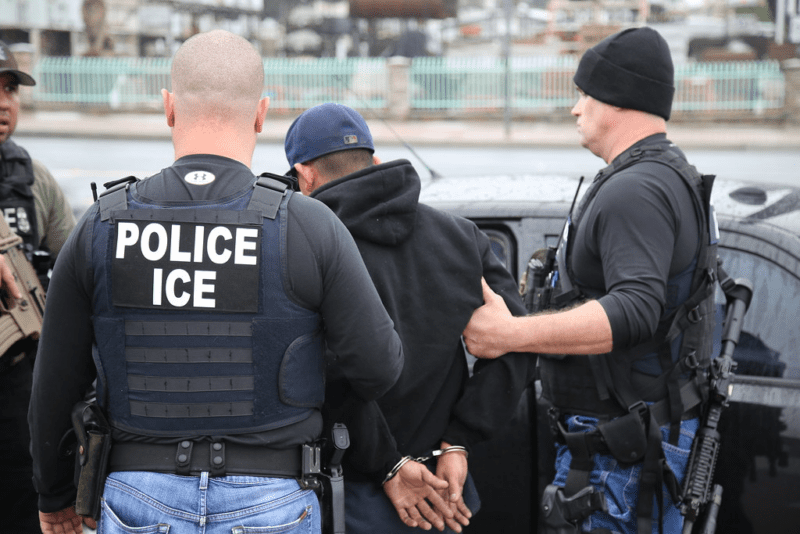
The fatal shooting of 37-year-old American citizen Renee Nicole Good by an Immigration and Customs Enforcement officer in Minneapolis on January 8, 2026, ignited a political firestorm that overshadowed weekend sports as President Trump threatened to invoke the Insurrection Act against protesters while simultaneously celebrating Venezuela oil seizure plans and pushing Greenland annexation. The disturbing video footage captured from multiple angles including from the ICE officer’s own body camera shows Good being shot in her vehicle, triggering massive protests across Minnesota and beyond as the Trump administration hardened its defense of the agent while local officials accused federal authorities of excessive force and political intimidation. The convergence of domestic political crisis, aggressive foreign policy moves, and sports championships created a weekend where Americans confronted fundamental questions about the rule of law, federal power, and whether the country still operates under constitutional constraints or has descended into authoritarian governance where political opponents face weaponized law enforcement.
Secretary of Homeland Security Kristi Noem characterized the Minneapolis protests following Good’s death as “an act of domestic terrorism,” while Vice President JD Vance delivered the chilling assessment that “I can believe that her death is a tragedy while also recognizing that it’s a tragedy of her own making,” blaming the victim for her own killing by a federal agent. The administration’s response demonstrates a calculated strategy of justifying violence against citizens while labeling dissent as terrorism, creating conditions where peaceful protest becomes criminalized and federal agents operate with impunity. Minneapolis Mayor Jacob Frey responded with profanity-laced defiance telling ICE to “get the f*** out of Minneapolis,” capturing the rage felt by local officials watching federal forces operate in their jurisdictions without accountability or coordination.
The Trump administration escalated tensions by deploying hundreds of additional ICE agents to Minnesota throughout the week, with Trump referring to demonstrators as “professional agitators” and threatening to invoke the Insurrection Act, a law originally passed in 1807 that allows presidents to deploy military forces domestically to suppress civil disorder. The Insurrection Act has been used sparingly throughout American history, most recently discussed during 2020 racial justice protests, and its invocation would represent an extraordinary assertion of federal power that legal scholars warn could fundamentally alter the balance between state and federal authority. Trump’s willingness to threaten military deployment against American citizens protesting a federal agent’s killing of an American mother signals a politics of intimidation where dissent becomes sedition and federal law enforcement operates as the president’s personal army.
The Department of Justice announced investigations into Minnesota Governor Tim Walz and Minneapolis Mayor Jacob Frey focusing on possible obstruction of federal law enforcement, accusations both men vehemently denied while characterizing the probes as political retaliation for criticizing the Trump administration’s immigration enforcement tactics. Senator Mark Kelly alleged that “more and more of Donald Trump’s political opponents are finding themselves targeted by his Justice Department,” while Senator Elizabeth Warren vowed Democrats would not be “bullied into submission” and accused Trump of “weaponizing the Justice Department.” The investigations represent a dangerous escalation where federal prosecutors target state and local officials who resist Trump’s policies, creating a chilling effect that could deter elected officials from exercising their constitutional duties to protect constituents from federal overreach.
A federal judge ruled Friday that ICE agents are not allowed to arrest peaceful protesters or stop people in their cars without cause, providing limited judicial pushback against the administration’s aggressive tactics but raising questions about enforcement when federal agents operate with apparent presidential backing to ignore court orders. The ruling came as protests continued in Minneapolis and spread to other cities, with demonstrators demanding accountability for Good’s killing and broader reforms to immigration enforcement that has resulted in at least 568 injured police officers according to administration figures by early January. The casualty count among security forces suggests a level of confrontation beyond typical peaceful protests, though whether violence originated from protesters defending themselves against aggressive federal tactics or from deliberate agitator infiltration remains disputed.
The Trump administration’s simultaneously aggressive posture extended beyond domestic enforcement to international adventures, with the president threatening to apply new tariffs on countries that oppose his ambition of annexing Greenland. Denmark and Greenland diplomats traveled to the White House on January 16 to meet with Vice President Vance after Trump repeated threats to take over the autonomous Danish territory, creating a diplomatic crisis with a NATO ally that raises fundamental questions about the administration’s respect for international law and territorial sovereignty. The Greenland annexation obsession, combined with the Venezuela invasion that captured President Nicolas Maduro, creates a pattern where Trump views international borders and national sovereignty as obstacles to overcome through threats, economic coercion, or military force rather than inviolable principles that structure the global order.
The Venezuela situation continued developing over the weekend, with Trump boasting on Meet the Press that “We are taking billions and billions of dollars worth of oil,” effectively announcing that the United States intends to seize Venezuelan natural resources following the military operation that killed at least 80 people and captured the country’s elected leader. Senator Chris Murphy characterized the plan as “insane” noting “They are talking about stealing the Venezuelan oil at gunpoint,” a description that accurately captures how international observers view American actions. The brazen admission that the U.S. invaded Venezuela to steal its oil represents unprecedented candor about imperial motives that previous administrations obscured with rhetoric about democracy promotion and humanitarian intervention, suggesting Trump sees no need to maintain even rhetorical commitment to international law or norms.
Meanwhile in Iran, the nationwide uprising that began December 28 entered its fifteenth day on January 11, with protesters attempting to maintain demonstrations despite brutal crackdowns by authorities and internet blackouts designed to prevent coordination. Iran issued warnings of retaliation if the U.S. uses force to support anti-government protesters, creating potential for another major international crisis as Trump has openly discussed military options. The human rights monitor HRAI verified deaths of 483 protesters and 47 security personnel since protests began, though actual casualties likely exceed these numbers given government efforts to suppress information. The Iranian regime successfully shut down Starlink internet for the first time amidst the ongoing blackout, demonstrating that even Elon Musk’s satellite network can be defeated by determined authoritarian governments willing to deploy sufficient technical resources.
Amid these cascading political crises, Poland defeated Switzerland 2-1 in the United Cup final at the Ken Rosewall Arena in Sydney, Australia, on January 11, capturing their first United Cup title in the tennis tournament that serves as a warmup to the Australian Open. The Polish victory provided a rare moment of straightforward athletic competition in a weekend otherwise dominated by political violence, authoritarian threats, and international lawbreaking. The fact that a tennis championship barely registered in American news coverage demonstrates how thoroughly Trump’s domestic and foreign aggression has consumed public attention, leaving little space for traditional sports coverage that would normally dominate weekend discussion.
In other sports developments largely overlooked amid political chaos, Myanmar held the second phase of elections to elect the nation’s bicameral legislature, with one more voting phase expected in late January. The elections proceed under military junta control following the 2021 coup that overthrew elected government, rendering them essentially meaningless democratic theater designed to provide thin legitimacy veneer to authoritarian rule. Citizens in Benin voted to elect 109 members of the National Assembly more than one month after a thwarted coup attempt, reflecting the fragile political situations facing many African democracies where military intervention remains constant threat.
The Minneapolis crisis extends beyond the immediate shooting to broader questions about immigration enforcement and the Trump administration’s willingness to deploy overwhelming force against American cities that resist federal directives. White House Border Czar Tom Homan appeared on Meet the Press defending ICE tactics and dropping references to Fox News reports about “bad guys who are being rounded up,” attempting to shift focus from Renee Good’s death to broader narratives about dangerous criminals being removed. The framing ignores that Good was an American citizen with three children who posed no criminal threat, but administration officials appear unconcerned with such distinctions when prosecuting their immigration agenda.
Minnesota officials found themselves in an impossible position, caught between constituents demanding they protect residents from federal agents operating with apparent immunity and a Justice Department threatening prosecution if they interfere with ICE operations. Governor Walz’s decision to withdraw from Minnesota’s next gubernatorial race, announced in a Friday statement where he said “Every minute that I spend defending my own political interest would be a minute I can’t spend defending the people of Minnesota against the criminals who prey on our generosity and the cynics who want to prey on our differences,” reflects the tremendous pressure elected officials face when federal prosecutors target them for political reasons. The withdrawal hands Trump a significant victory by removing a vocal critic from electoral politics while sending message to other governors and mayors that resistance carries severe personal cost.
The weaponization of the Justice Department that Minnesota officials describe represents a fundamental threat to American federalism and democratic governance. When federal prosecutors investigate state and local officials not for actual crimes but for exercising their constitutional authorities and criticizing federal overreach, it transforms the justice system from neutral arbiter into political enforcement arm of whoever controls the presidency. The Trump administration’s willingness to deploy this tactic so openly, without even pretending that investigations stem from legitimate law enforcement concerns rather than political retaliation, suggests confidence that institutional guardrails have eroded to the point where presidential power faces no meaningful constraints.
The National Guard deployment to Washington D.C. through the end of 2026 announced during this period creates additional concerns about militarization of civilian governance and preparation for potential unrest surrounding the 2026 midterm elections. When combined with Trump’s Insurrection Act threats, Venezuela invasion, Greenland annexation demands, and Justice Department investigations of political opponents, a pattern emerges of an administration systematically dismantling constitutional constraints on executive power while preparing to deploy military force against domestic and international resistance. The question facing Americans is whether sufficient institutional resistance remains to prevent democratic backsliding from accelerating into full authoritarian consolidation or whether Trump’s second term represents an inflection point from which the republic cannot recover.
Redpulse Pro is built for readers who want to go deeper into the stories that shape finance, politics, and power. While our free content keeps you informed, Pro gives you the tools, insights, and access to stay ahead of the curve. With our Pro subscription, you follow the money, uncover hidden connections, and get the inside track on the narratives mainstream media won’t touch. Subscribe to Redpulse Pro here.

Leave a comment