
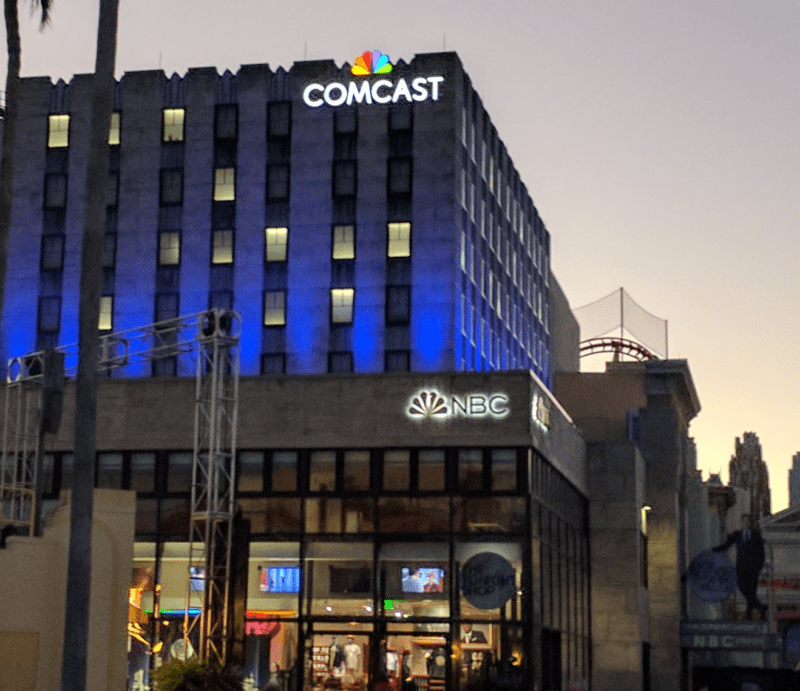
Broadcasting and media stocks suffered brutal selloffs Thursday February 6 following Milano Cortina 2026 Winter Olympics opening ceremony that drew smaller-than-expected audiences despite Mariah Carey headlining the spectacular San Siro Stadium production. Comcast plunged 4.2%, Disney dropped 3.8%, and Warner Bros Discovery fell 3.4% as preliminary Nielsen data suggested NBC’s live afternoon coverage attracted just 18.3 million viewers, well below the 25+ million that network executives had projected when negotiating the $7.75 billion broadcasting rights package through 2032. The disappointing viewership reflected Olympics’ ongoing struggle to maintain cultural relevance in fragmented media environment where younger demographics ignore traditional sports broadcasting in favor of social media, streaming, and infinite entertainment alternatives competing for limited attention spans.
The ceremony’s multi-location format spanning Milan’s San Siro Stadium, Cortina d’Ampezzo, Livigno, and Predazzo created logistical complexity that confused American viewers accustomed to centralized spectacles, while the 2 PM Eastern Time broadcast conflicted with work schedules that prevented millions from watching live coverage. NBC’s primetime encore scheduled for 8 PM Thursday could boost total viewership closer to network projections, though primetime broadcasts of tape-delayed events historically attract significantly smaller audiences than live coverage given social media spoilers and reduced urgency to tune in for outcomes already determined hours earlier.
The “Armonia” themed ceremony featuring 1,200 volunteer performers, elaborate Italian cultural showcases, and two Olympic cauldrons lit simultaneously in Milan and Cortina represented unprecedented production ambition. However, RAI broadcaster’s commentary came under heavy criticism for director Paolo Petrecca’s numerous gaffes including confusing actress Matilda De Angelis with Mariah Carey, mistaking IOC President Kirsty Coventry for President Mattarella’s daughter, and making offensive cultural stereotypes during athletes’ parade. RAI Sport journalists announced they would withdraw signatures from reports and commentary in protest against Petrecca’s disastrous performance, creating controversy that overshadowed the ceremony’s artistic achievements.
Team USA’s 232 athletes comprising the largest Olympic delegation led parade entries at multiple venues, with speed skater Erin Jackson and alpine skier Frank Del Duca sharing flagbearer honors. Colorado provided 30 Team USA athletes, more than any other state, reflecting the state’s dominance in winter sports training infrastructure and proximity to world-class mountain venues. The distributed athlete parades across four locations allowed more competitors to participate in opening ceremonies rather than missing events to travel to single venue, though the innovation sacrificed visual impact of unified parade that historically characterized Olympic pageantry.
Sports betting ETFs surged Thursday as DraftKings and FanDuel reported record Super Bowl LX handle exceeding $10 billion, validating investment theses that legalized gambling expansion creates sustainable growth opportunity despite regulatory headwinds and addiction concerns. Roundhill Sports Betting & iGaming ETF climbed 6.8% while Defiance Next Gen Sports Betting & iGaming ETF advanced 5.9%, driven by optimism that betting platforms can maintain momentum through March Madness, NBA playoffs, and baseball season despite Olympics competition for gambling dollars. The extraordinary Super Bowl betting volumes demonstrated how rapidly sports wagering has been normalized among mainstream audiences rather than remaining niche activity confined to Nevada casinos and illegal bookmakers.
DraftKings surged 8.2% and FanDuel parent company Flutter Entertainment jumped 7.6% as investors calculated that $10 billion Super Bowl handle generated roughly $400-500 million in net gaming revenue after paying out winning bets, with the platforms capturing approximately 10% hold rates on total money wagered. The Super Bowl represents single largest betting event annually for U.S. sportsbooks, though championship generates just fraction of yearly handle dominated by regular season NFL, college football, NBA, and MLB wagering that provides steady revenue streams throughout calendar year.
Emerging market stocks extended January’s impressive rally Thursday as the MSCI Emerging Markets index added 1.4% following BlackRock Investment Institute analysis highlighting how mega forces including AI adoption and commodity demand create sustained opportunities despite elevated valuations relative to historical norms. The January surge that saw EM equities gain 9% marked the best monthly performance since 2012 and easily surpassed developed market’s 2.2% advance, validating rotation thesis that investors should reduce expensive U.S. mega-cap exposure in favor of cheaper international alternatives. South Korean stocks have climbed over 20% year-to-date following 2025’s strong gains, driven by memory chip manufacturers Samsung and SK Hynix benefiting from insatiable AI infrastructure demand.
The iShares MSCI Emerging Markets ETF, ticker EEM, gained 1.6% Thursday while Vanguard FTSE Emerging Markets ETF, ticker VWO, advanced 1.4% as institutional flows into EM funds accelerated. BlackRock analysts noted that differentiation among emerging markets rewards active stock selection rather than passive index exposure, with South Korea’s technology focus creating vastly different return profiles than India’s domestic consumption story or Brazil’s commodity dependence. The selectivity requirement favors actively managed EM funds over passive trackers, though expense ratios averaging 0.75-1.25% for active funds versus 0.08-0.25% for passive alternatives create substantial cost hurdles that managers must overcome through superior security selection.
Commodities markets experienced modest Thursday gains as gold recovered $42 to trade near $4,854 per ounce following Friday January 30’s catastrophic selloff that wiped out months of gains. Silver rebounded $3.20 to reach $83.75, recouping small portion of the 30% Friday plunge that devastated leveraged bulls who chased the white metal to all-time highs above $110 before momentum reversed violently. The precious metals bounce reflected short covering from speculators who sold aggressively during Friday’s panic rather than genuine conviction that bullish fundamentals justify elevated valuations, creating conditions where rallies prove short-lived before renewed selling emerges.
Copper gained 2.1% to $9,840 per ton as traders focused on structural demand from AI data center construction and electric vehicle production rather than cyclical concerns about global economic growth. Goldman Sachs maintained $10,710 copper forecast for first half 2026, citing supply constraints from aging mines and insufficient new capacity development to meet projected demand increases. The red metal’s industrial applications create more stable fundamental support than precious metals dependent on monetary debasement narratives and speculative positioning, though copper still experiences violent swings when macro sentiment shifts.
For investors seeking to capitalize on commodities volatility and sector rotations through systematic strategies, TradersPost enables automated trading bots for stocks, crypto, options, and futures, integrating seamlessly with strategies from TradingView and TrendSpider. Execute trades effortlessly across top brokers like Tradovate, TradeStation, Coinbase, Interactive Brokers, and Alpaca. Redpulse readers can use code REDPULSE for 20% off at TradersPost.
The broadcasting sector’s Olympics disappointment extends beyond single ceremony viewership to broader questions about whether Winter Games can maintain commercial viability when audiences fragment across streaming, social media, and alternative entertainment options. NBC paid $7.75 billion for U.S. rights through 2032 assuming that Olympics would continue delivering massive audiences that justify premium advertising rates, though declining viewership threatens this business model and could force networks to renegotiate future contracts at substantially reduced prices. The International Olympic Committee’s revenue depends heavily on broadcasting deals, meaning viewership erosion threatens the organization’s ability to distribute hundreds of millions annually to national Olympic committees and international sports federations.
The streaming-first Olympics consumption that NBC promotes through Peacock creates cannibalization where cord-cutters access content without generating traditional broadcast advertising revenue that has historically funded Olympics coverage. While Peacock subscriptions provide some revenue replacement, the economics differ dramatically from broadcast model where advertisers pay premium CPMs for guaranteed audience delivery during marquee events. The transition from broadcast to streaming mirrors broader television industry disruption where content costs increase while monetization becomes more challenging, squeezing margins and questioning sustainability of expensive rights deals.
Looking ahead to remainder of Milano Cortina 2026 coverage, NBC faces challenging environment where must demonstrate sufficient viewership to satisfy advertisers who committed to expensive commercial packages months before ceremonies. The network’s promotional strategy emphasizing streaming access and multi-platform consumption creates measurement challenges where Nielsen overnight ratings that traditionally defined success no longer capture complete audience picture. However, advertisers increasingly demand accountability through sales attribution and audience verification rather than accepting reach and frequency metrics that overstate actual engagement.

