

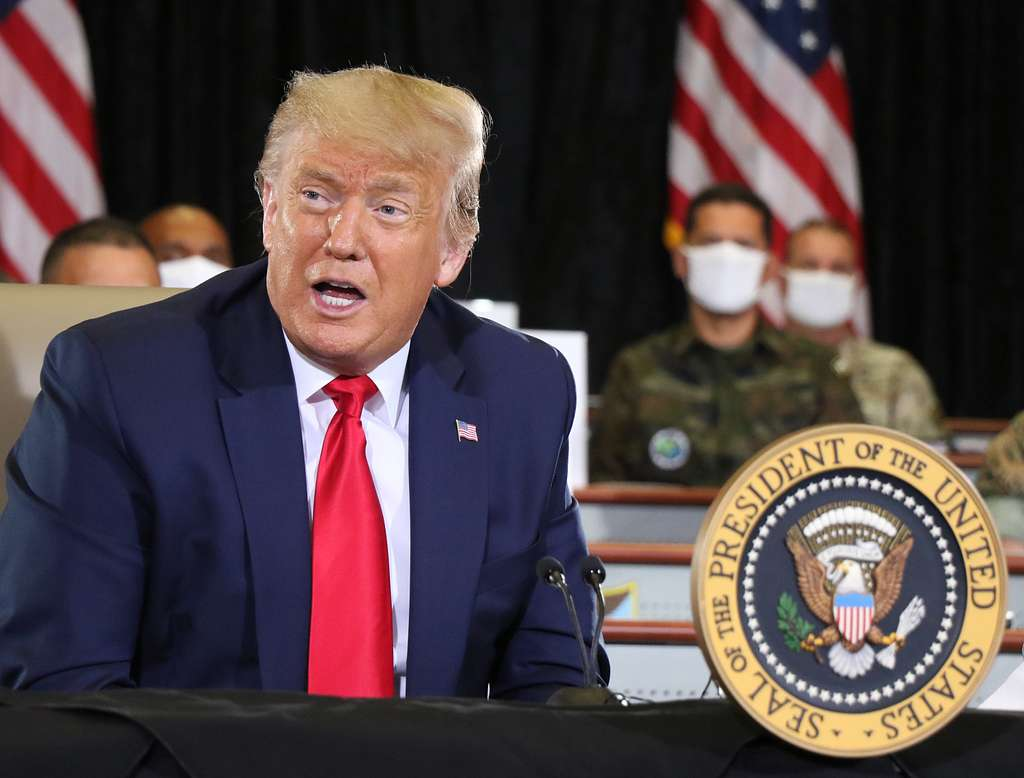
President Donald Trump expressed confidence, Monday, that his upcoming meeting with Chinese President Xi Jinping will produce a comprehensive trade deal as Treasury Secretary Scott Bessent told reporters that Trump’s threatened 100% tariff increase on Chinese goods is effectively off the table. Speaking aboard Air Force One en route to Japan from Malaysia, Trump added that he could sign a final deal on TikTok as early as Thursday, suggesting the summit will address multiple contentious issues beyond trade.
Trump said Monday that Washington and Beijing were poised to come away with a trade deal ahead of his expected meeting with Chinese leader Xi Jinping. The president’s optimistic tone marks a dramatic reversal from mid-October when he threatened massive tariff increases after China expanded export restrictions on rare earth minerals critical to American technology and defense manufacturing. Conservative trade policy experts argue that Trump’s willingness to threaten aggressive action before negotiating demonstrates strength rather than inconsistency.
As Trump mingled with other leaders in Malaysia, U.S. and Chinese negotiators met on the sidelines of the ASEAN summit, where bilateral talks yielded a framework ahead of an expected meeting between Trump and Xi in South Korea on Thursday. The behind-the-scenes negotiations produced preliminary consensus on export controls, fentanyl cooperation and shipping fees according to Chinese trade negotiator Li Chenggang, who described the discussions as very intense.
Trump began his whirlwind weeklong Asia trip on Sunday with a flurry of trade and mineral agreements with his Malaysian and Cambodian counterparts, as well as frameworks for trade pacts with Thailand and Vietnam. The four countries, part of the 11-member Association of Southeast Asian Nations, pledged to remove trade barriers and provide preferential market access to American goods. Under the agreements, Washington will keep a 19% tariff rate on most exports from Malaysia, Cambodia and Thailand, while some products will face no duties.
Tariffs on Vietnam will remain at 20% with some goods eligible for duty-free access, with Vietnam having recorded a trade surplus of $123 billion with the U.S. The framework agreements demonstrate Trump’s strategy of securing multiple bilateral deals with Asian nations rather than joining multilateral pacts that constrain American negotiating leverage. Conservative economists argue that bilateral negotiations allow the United States to maximize advantages from its position as the world’s largest consumer market.
Treasury Secretary Scott Bessent said Sunday morning on NBC’s Meet the Press that he believes negotiators have reached a very substantial framework that will avoid the tariff hike and allow discussion of many other things with the Chinese. The positive environment means Bessent does not anticipate that Trump’s promise of 100% additional tariffs on China will go into effect on November 1st as currently planned. The secretary’s public confirmation removes a major source of uncertainty that had weighed on business investment and financial market sentiment.
The government shutdown entered its 27th day Monday as Trump conducted diplomacy halfway around the world while congressional Democrats maintained their demands for Affordable Care Act subsidy extensions before voting to reopen the government. The extended funding lapse has created an unusual dynamic where the president pursues major foreign policy initiatives while domestic governance remains paralyzed by partisan gridlock over healthcare policy.
Trump told traveling reporters Monday on Air Force One that while nothing has yet been agreed, he felt good going into the meeting with Xi set to take place on the sidelines of the Asia-Pacific Economic Cooperation summit in South Korea. The president’s confidence reflects weeks of intensive negotiations between U.S. and Chinese trade officials who established the framework that Trump and Xi will formalize during their Thursday bilateral meeting.
Chinese Premier Li Qiang flew to Malaysia for the 28th China-ASEAN Summit before stopping in Singapore where he witnessed the signing of eight agreements covering trade and the digital economy. Beijing’s aggressive diplomatic engagement throughout Southeast Asia demonstrates that China views the region as critical to its economic strategy, competing directly with American efforts to strengthen ties with ASEAN nations. The parallel diplomacy by both superpowers creates opportunities for Southeast Asian countries to extract concessions from both Washington and Beijing.
Wall Street celebrated the trade deal optimism with the S&P 500 hitting new all-time highs Monday as investors rotated from safe-haven assets into riskier equities. The market’s powerful response validates Trump’s negotiating strategy of applying maximum pressure through tariff threats before pivoting to constructive engagement that produces concrete results. Critics who characterized this approach as destabilizing have been proven wrong repeatedly as markets reward eventual compromises.
Conservative foreign policy analysts note that Trump’s Asia trip demonstrates his ability to conduct sophisticated diplomacy while simultaneously managing domestic political crises. The president’s decision to proceed with the trip despite the government shutdown signals confidence that Democrats will ultimately bear responsibility for blocking funding legislation. Trump’s absence from Washington allows congressional Republicans to maintain pressure on Democrats without appearing to negotiate under presidential duress.
Chinese top trade negotiator Li Chenggang said Sunday that a preliminary consensus had been reached after very intense discussions on a range of issues, with the next step being for both sides to complete their domestic approval procedures. This structured approach increases the probability that Thursday’s summit will succeed, as leaders will primarily formalize agreements already negotiated rather than attempting to resolve fundamental disputes in real-time.
Trump’s whirlwind diplomatic schedule includes meetings with Japanese Prime Minister Sanae Takaichi and Emperor Naruhito before traveling to South Korea for the APEC summit where the Xi meeting will occur. The president’s warm relationship with Japan’s new conservative prime minister stands in stark contrast to deteriorating relations with Canada, demonstrating that Trump rewards allies who share American values while punishing those who criticize his policies.
The terminated trade talks with Canada following Ontario’s anti-tariff advertisement campaign illustrate Trump’s unwillingness to tolerate disrespect from foreign governments. Conservative trade analysts argue that Canada’s provincial advertisement featuring Ronald Reagan references constituted inappropriate interference in American domestic politics, justifying Trump’s decision to walk away from negotiations. The hardline approach sends signals to other trading partners that criticizing Trump carries concrete consequences.
Senate Democrats announced plans to force votes next week on reversing Trump’s tariffs on Canada and other countries, with Minority Leader Chuck Schumer characterizing the president’s trade policies as price-spiking temper tantrums costing Americans real money. However, Republicans dismiss these calculations as politically motivated exaggerations designed to undermine Trump’s trade agenda. Conservative economists note that temporary price increases from tariffs pale in comparison to long-term economic damage from allowing foreign countries to maintain unfair practices.
The Congressional Budget Office released a report stating the government shutdown is costing the economy approximately $7 billion per month that won’t be recovered when operations resume. However, Trump administration officials argue that permanent workforce reductions and program eliminations achieved during the shutdown will generate long-term savings that dwarf temporary economic costs. Office of Management and Budget Director Russ Vought stated that layoff notices will eventually exceed 10,000 federal employees.
Senate Democrats plan to bring a stand-alone funding bill to keep SNAP and WIC food assistance programs afloat this afternoon, attempting to pass it by unanimous consent requiring all 100 senators to agree. Senator Ben Ray Luján stated that the Trump administration has the authority and funds to keep SNAP running, arguing that no child, veteran, grandparent or hardworking American should go hungry because of partisan politics. Republicans counter that Democrats could immediately end this hardship by voting for clean government funding.
Three U.S. officials told reporters that Trump is considering plans to target cocaine facilities and drug trafficking routes inside Venezuela, potentially expanding military operations beyond maritime interdiction. The administration’s aggressive counter-narcotics strategy reflects Trump’s determination to protect American citizens from fentanyl and other drugs killing hundreds of thousands annually. Conservative national security experts argue that Latin American governments have failed for decades to control trafficking organizations, justifying American intervention.
Trump acknowledged aboard Air Force One that he authorized the CIA to conduct covert action in Venezuela and said the United States was considering strikes on Venezuelan territory. The president suggested some openness to informing Congress about future land-based operations, stating that if strikes move beyond maritime targets the administration may go back to Congress to explain exactly what they’re doing. However, Trump insisted the U.S. is allowed to conduct such operations and defended destroying alleged drug trafficking boats by claiming every vessel eliminated saves 25,000 American lives.
The escalating confrontation with Colombia and Venezuela over counter-narcotics operations demonstrates Trump’s willingness to use military force unilaterally despite sovereignty concerns or international law constraints. Colombian President Gustavo Petro continued criticizing American strikes that allegedly killed innocent Colombians, prompting Trump to call Petro an illegal drug leader and threaten to cut foreign aid while raising tariffs on Colombian goods.
As Trump conducts high-stakes diplomacy throughout Asia, the convergence of trade deal optimism with ongoing domestic political crises creates a complex environment where foreign policy successes may provide the president with political capital to maintain hardline positions on the government shutdown. The question now facing Washington is whether Trump’s anticipated triumph at the Xi summit will strengthen his negotiating position sufficiently to force Democratic concessions on healthcare subsidies and government funding.
Conservative strategists calculate that successful trade negotiations with China combined with framework agreements throughout Southeast Asia will vindicate Trump’s unconventional approach to international relations that prioritizes American interests over diplomatic niceties. The president’s transactional style that critics characterize as unpredictable has consistently produced concrete results that benefit American businesses and workers, validating his rejection of establishment foreign policy consensus that prioritized alliance management over tangible deliverables.
Thursday’s Trump-Xi summit represents the culmination of months of escalating tensions and temporary truces that have characterized U.S.-China relations throughout Trump’s second term. The meeting carries enormous stakes for both leaders, with Trump seeking concrete victories on agricultural purchases and fentanyl cooperation while Xi attempts to secure rollbacks of technology export controls that have constrained Chinese access to advanced semiconductors and software. The outcome will likely determine whether the world’s two largest economies continue their managed competition or slide toward more dangerous confrontation that threatens global economic stability.

Leave a comment