

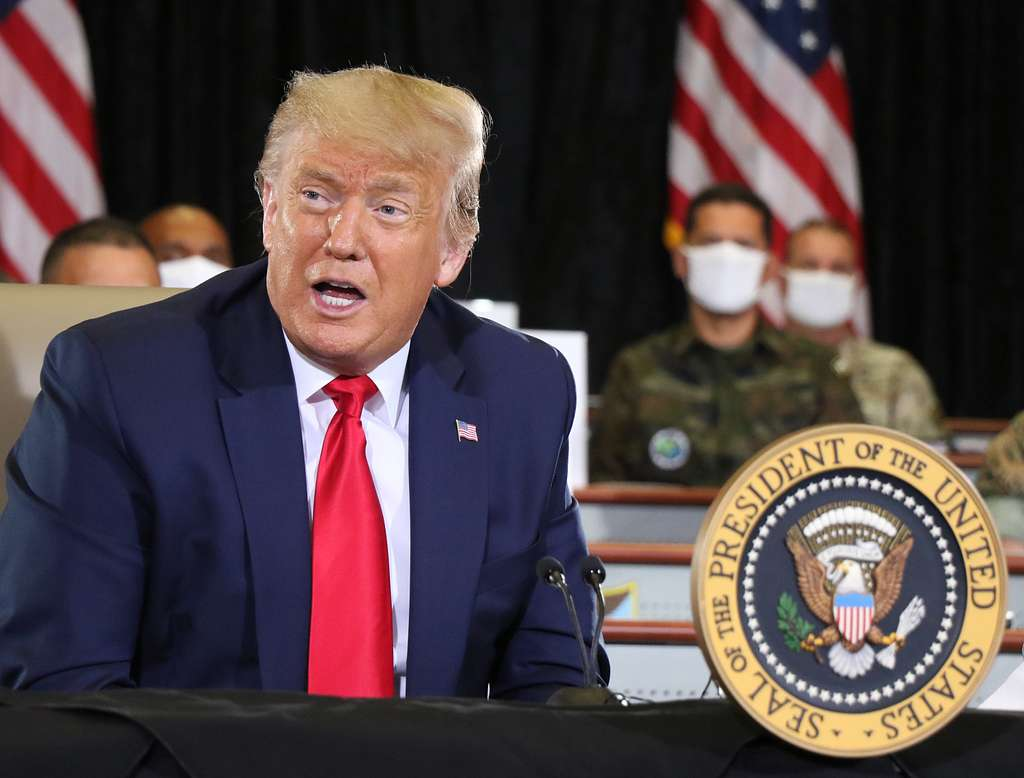
The government shutdown officially became the longest in American history Tuesday night, November 4, 2025, as voters delivered devastating defeats to Republicans in off-year elections that both parties characterized as a referendum on President Trump’s agenda. Today marks day 36 of the ongoing government shutdown, making it the longest in U.S. history, taking the title from the most recent shutdown which stretched from December 2018 to January 2019 during President Trump’s first term in office.
Up and down the ballot, Democrats did well, from the marquee gubernatorial races in Virginia and New Jersey to a key redistricting ballot initiative in California and even state Supreme Court races in Pennsylvania. The comprehensive Democratic victories shocked Republican strategists who had been confident that voters would ultimately blame Democrats for the funding lapse rather than holding the GOP accountable for refusing to extend healthcare subsidies.
Democrat Abigail Spanberger won the governor’s race in Virginia by 15 points with a message that argued Trump’s push to fire federal workers and slash federal spending, and later the ongoing government shutdown, harmed the state’s economy. Virginia’s outcome proved particularly devastating for Republicans given that the state is home to around 320,000 federal workers and hundreds of thousands of federal contractors who felt the shutdown’s impact directly.
It’s rare for President Trump and Democrats to agree, but both say the longest-ever government shutdown contributed to a dismal showing for Republicans in Tuesday’s off-year election. Trump told Senate Republicans at a breakfast Wednesday morning that he thinks if you read the pollsters, the shutdown was a big factor, negative for the Republicans. The president’s acknowledgment represented a significant departure from his previous insistence that Democrats would bear political responsibility for blocking government funding.
After the election, House Minority Leader Hakeem Jeffries and Senate Minority Leader Chuck Schumer sent a letter to the president demanding he negotiate with them to reopen the government. The letter stated that we write to demand a bipartisan meeting of legislative leaders to end the GOP shutdown of the federal government and decisively address the Republican healthcare crisis. The note ended with Trump’s signature line “Thank you for your attention to this matter.”
A procedural vote on a House-passed measure to fund the government until November 21st fell short of the 60 votes needed in a 54 to 44 vote, marking the 14th failed attempt with no new support from Democrats despite expressions of optimism from some Republicans that the shutdown might be nearing an end. The continued Democratic unity demonstrated that Tuesday’s electoral victories strengthened rather than weakened their resolve to demand healthcare subsidy extensions before voting to reopen the government.
Senator Markwayne Mullin told reporters Tuesday morning that he’s pretty confident the shutdown will end this week, saying it could be resolved Wednesday night or more likely on Thursday or Friday. Mullin suggested that Democrats could support the measure to reopen the government after Tuesday’s elections, saying they didn’t want to discourage their base from turning out to vote. The Oklahoma Republican’s optimism reflected GOP hopes that Democrats would view election victories as providing sufficient political cover to compromise.
Transportation Secretary Sean Duffy said the Department of Transportation may need to close certain parts of the airspace if the government shutdown continues into next week, warning you will see mass flight delays, you’ll see mass cancellations, and you may see us close certain parts of the airspace because we just cannot manage it because we don’t have the air traffic controllers. The dramatic escalation in consequences created additional pressure on both parties to find resolution before Thanksgiving travel chaos materialized.
The election vindicated the Democrats’ strategy of refusing to approve Trump’s budget unless Republicans relented and backed continued funding for expiring subsidies for the Affordable Care Act and rejected deep cuts to Medicaid and SNAP. Until Election Day, Democrats were on the verge of caving in to Republican demands to rubber-stamp Trump’s budget in exchange for meaningless assurances, with eight Senate Democrats having back-channel negotiations with Republican colleagues, but the election victory restored the Democrats’ caucus unity.
One of the biggest rebukes of Trump administration policies came in Virginia, home to around 320,000 federal workers and hundreds of thousands of federal contractors. Democrat Abigail Spanberger told supporters in Falls Church on Sunday night that it’s not about what we’re against, it’s what we are for, adding a Virginia victory would send a message to the country that we expect them to follow in 2026.
Conservative analysts acknowledged that the Spanberger victory margin exceeded worst-case scenario projections, suggesting the shutdown inflicted more damage on Republican prospects than internal polling indicated. The 15-point defeat in a state that Trump narrowly won in 2024 demonstrates how quickly voter sentiment can shift when policy decisions create visible hardship for constituents. However, Republican strategists argued that Virginia’s unique concentration of federal workers made it unrepresentative of broader national trends.
Behind the scenes, Senate and House GOP leaders are confident Democrats will cave shortly after the November 4 elections, with many pointing to a flurry of talks with some centrist Democrats to end the shutdown perhaps in exchange for a vote to extend enhanced Affordable Care Act subsidies. The Republican optimism reflected belief that Democrats would recognize their electoral victories provided sufficient political cover to compromise without appearing weak.
In recent polling, more voters still blame Trump and Republicans for the shutdown than they do Democrats, and while the expiration of food aid has pushed more Democrats to seek an end to the shutdown, it’s also worried a swath of Republicans who represent the millions of red-district voters reliant on SNAP and are already under pressure over high prices, healthcare and other economic issues. The political vulnerability of rural Republicans whose constituents depend heavily on food assistance created fractures in GOP unity.
The contours of a potential deal to reopen the government began to emerge on Tuesday, with senators discussing an agreement that would fund the government alongside long-term appropriations bills in exchange for a vote on extending health insurance tax credits that Democrats have demanded. The framework represented significant Republican retreat from earlier insistence that Democrats must vote for clean funding before negotiations on healthcare policy could proceed.
The Democratic Party will have to wrestle with its identity over the next year, from Zohran Mamdani as mayor of New York to Abigail Spanberger for Virginia governor, with a real debate on how best for Democrats to present themselves to win in next year’s midterm elections. The victories by candidates representing different ideological wings created both opportunity and tension within the party about which approach would prove most successful in 2026 congressional races.
President Trump’s response to the electoral disaster demonstrated his characteristic unwillingness to accept personal responsibility for Republican defeats. The president blamed everyone from Senate Majority Leader John Thune to moderate Republicans who had urged him to compromise on the shutdown rather than acknowledging that his intransigence on healthcare subsidies contributed to the poor results. Trump also renewed his demand that Republicans eliminate the filibuster, ignoring that such a move would empower future Democratic majorities to pass sweeping progressive legislation.
The U.S. Department of Agriculture told a federal court that it would comply with a judge’s order to use about $4.6 billion in a contingency fund to pay eligible SNAP recipients 50% of their benefits for November. However, Agriculture Secretary Brooke Rollins and the USDA official in charge of SNAP warned that difficulties in processing the partial benefits could lead to delays, creating additional hardship for recipients already facing empty refrigerators.
The convergence of the longest shutdown in history with comprehensive Republican electoral defeats created maximum pressure on Trump and congressional leaders to find face-saving compromise. However, the president’s pattern of doubling down when confronted with political setbacks suggested he might maintain his hardline position despite overwhelming evidence that voters rejected Republican strategy. Conservative policy analysts privately acknowledged that Trump’s refusal to acknowledge responsibility for the losses made finding a path forward extraordinarily difficult.
The question now facing Washington is whether Tuesday’s electoral catastrophe will force Trump to direct congressional Republicans to negotiate seriously with Democrats or whether the president will continue demanding the impossible elimination of the filibuster. Senate Majority Leader Thune’s consistent opposition to nuking the filibuster creates an impasse where Trump’s preferred solution remains unavailable regardless of how forcefully he demands it.
As the shutdown extends beyond 36 days with Thanksgiving travel chaos looming and SNAP recipients facing delayed partial benefits, the human costs continue mounting while both parties grapple with fundamentally different interpretations of Tuesday’s election results. Democrats view the comprehensive victories as validation of their refusal to reopen government without healthcare guarantees, while Republicans argue the losses prove they should have compromised weeks ago rather than allowing the crisis to reach historic proportions. The divergent lessons drawn from the same electoral disaster suggest that finding common ground remains extraordinarily difficult despite mounting evidence that continued confrontation serves neither party’s political interests.

Leave a comment