
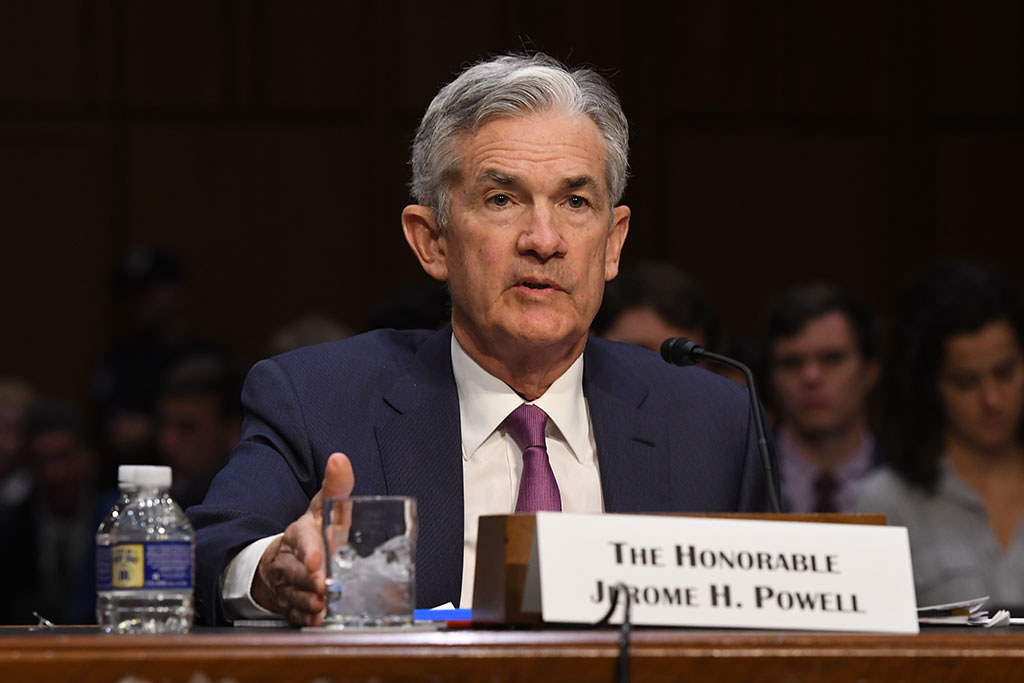
The Federal Reserve cut interest rates Wednesday, December 10, 2025, by a quarter point as expected, lowering borrowing costs for the third time this year while Chair Jerome Powell pushed back against President Donald Trump’s demands for more aggressive monetary easing. The decision caps a tumultuous year for central bank officials who have battled stubborn inflation, a weakening labor market, unprecedented committee dissents, and relentless personal attacks from Trump threatening to fire Powell before his term expires.
Wall Street rallied after Powell ruled out any immediate need for rate hikes despite Trump’s inflation-stoking policies including massive tariffs that economists warn will drive consumer prices higher throughout 2026. The Dow gained 497 points or 1.05%, while the S&P 500 gained 0.67% and closed just shy of a record high. The tech-heavy Nasdaq Composite gained 0.33%, demonstrating investor relief that monetary policy will remain accommodative even as central bank officials project only one additional rate cut next year.
National Economic Council Director Kevin Hassett stated just moments before the Fed’s announcement that he would vote for a half-point interest rate cut if he were at this month’s meeting. Hassett, seen as one of Trump’s top picks to replace Powell as Fed chair when his term expires in May 2026, said “I think if you bring stronger data than he’s been using to show people rationale for why they could have a bigger rate cut, you could get to 50 [basis] points or more.” The comments demonstrate Trump administration frustration with Powell’s caution about cutting rates too aggressively when inflation remains above the Fed’s 2% target.
Conservative monetary policy experts support Powell’s prudent approach, noting that premature rate cuts risk reigniting inflation pressures that have only recently moderated from 40-year highs. The Federal Reserve’s mandate includes both price stability and maximum employment, requiring officials to balance competing risks rather than prioritizing short-term stock market gains or presidential political calculations.
Mortgage rates, which are indirectly impacted by Federal Reserve policy, are near the lowest levels of 2025. The average 30-year fixed mortgage rate was 6.19% last week according to Freddie Mac, meaning a homebuyer today could save hundreds of dollars a year on a typical home compared to last year when the 30-year averaged 6.69%. The declining rates provide tangible benefits for Americans seeking to purchase homes or refinance existing mortgages, demonstrating that monetary policy transmission mechanisms continue functioning despite political controversies.
Markets were relatively quiet before the 2 p.m. announcement as traders awaited the Federal Reserve’s decision. Central bank officials projected just one rate cut next year, disappointing investors who had hoped for more aggressive easing to support equity valuations trading near record highs. The cautious outlook reflects Powell’s determination to avoid repeating the 2021-2022 mistake when the Fed characterized inflation as transitory before being forced to implement the most aggressive tightening campaign in decades.
Trump has repeatedly attacked Powell throughout 2025, threatening to fire the Fed chair despite the Federal Reserve Act providing governors with 14-year terms specifically to insulate monetary policy from presidential interference. The president has called Powell “too slow,” “a major loser,” and suggested he lacks the intelligence necessary to manage the economy. These extraordinary attacks on Fed independence represent dangerous precedent that future presidents could exploit to politicize monetary policy decisions that should be guided by economic data rather than electoral calculations.
Hassett said he believes Trump will finalize his pick for Fed chair “in the next week or two,” though Powell’s term does not expire until May 15, 2026. The White House has floated multiple potential replacements including Hassett himself, hedge fund manager Scott Bessent who currently serves as Treasury Secretary, and various economists sympathetic to Trump’s preference for lower interest rates regardless of inflation consequences. Conservative institutionalists worry that replacing Powell with a presidential loyalist would undermine Fed credibility and trigger bond market vigilantes demanding higher yields to compensate for inflation risks.
Federal Reserve officials have navigated extraordinary political pressure during Trump’s second term while attempting to fulfill their statutory mandates of price stability and maximum employment. The president’s tariff policies create inflationary pressures that complicate monetary policy decisions, as Fed officials must determine whether to accommodate price increases driven by import duties or tighten policy to prevent second-order effects where businesses and workers demand higher prices and wages to offset tariff-induced cost increases.
Today’s meeting caps off a rough year for central bank officials who have battled stubborn inflation hovering around 3% rather than the 2% target, a weakening labor market with unemployment creeping higher from post-pandemic lows, more than the usual number of committee dissents reflecting policy disagreements, and relentless personal attacks from Trump questioning Powell’s competence and loyalty. The Fed chair has maintained his characteristic calm demeanor despite unprecedented presidential hostility that previous central bankers never faced.
The quarter-point cut brings the federal funds rate to a range of 4.25% to 4.5%, down from the peak of 5.25% to 5.5% reached in July 2023. The cumulative 100 basis points of cuts during 2025 represent significant easing that Powell argues remains appropriate given moderating inflation and cooling labor markets. However, projections of only one additional cut in 2026 signal that further reductions will depend on continued progress toward the 2% inflation target rather than automatic easing regardless of economic conditions.
Wall Street’s positive reaction to the rate cut and Powell’s comments demonstrates that investors appreciate Fed independence even when it disappoints their preference for more aggressive easing. The stock market’s record highs in 2025 occurred despite monetary policy remaining restrictive by historical standards, suggesting that corporate earnings growth rather than artificial stimulus has driven recent gains. Conservative portfolio managers recognize that sustainable bull markets require legitimate profit expansion rather than central bank manipulation of borrowing costs.
The Federal Reserve’s decision to cut rates three times during 2025 while projecting only one additional reduction in 2026 represents balanced approach that accommodates economic slowing without abandoning inflation-fighting credibility. Powell’s willingness to resist Trump’s pressure for half-point cuts demonstrates institutional independence remains intact despite unprecedented presidential attacks threatening central bank autonomy. The question facing markets as 2026 approaches is whether one additional rate cut proves sufficient to sustain economic expansion or whether renewed inflation from tariffs forces the Fed to pause easing entirely, disappointing investors who have bid stocks to valuations depending on continued monetary accommodation.
Redpulse Pro is built for readers who want to go deeper into the stories that shape finance, politics, and power. While our free content keeps you informed, Pro gives you the tools, insights, and access to stay ahead of the curve. With our Pro subscription, you follow the money, uncover hidden connections, and get the inside track on the narratives mainstream media won’t touch. Learn more at https://redpulse.com/buy/pro.
