

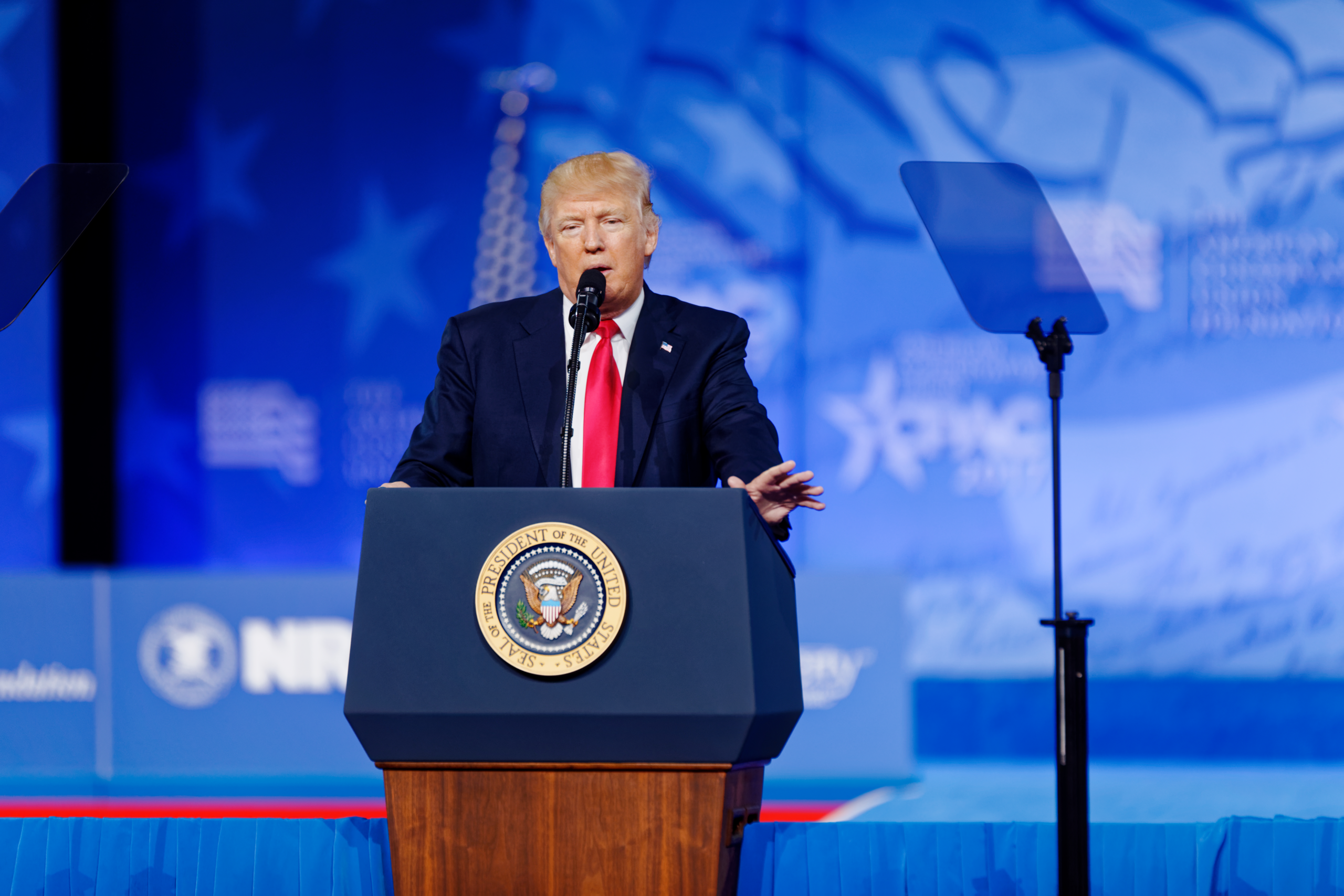
President Donald Trump pledged, Saturday, to pursue “serious retaliation” against ISIS after an ambush in central Syria killed two American soldiers and a civilian interpreter during what was described as a joint patrol with the new Syrian transitional government’s forces. An investigation is under way to determine whether the attacker was linked to ISIL, but Trump on Saturday blamed the armed group that had seized territories across Syria and Iraq in 2014.
As of December 2024, there were approximately 2,000 US soldiers stationed in Syria to continue the fight against ISIL, with American forces partnering with Syrian opposition groups following the fall of Bashar al-Assad’s regime in early December. The continued U.S. presence aims to prevent ISIS resurgence in territories the terrorist organization controlled during its 2014-2017 caliphate.
The official Syrian Arab News Agency (SANA) reported earlier that Syrian forces and US troops came under fire during a joint patrol, while the AFP news agency, meanwhile, quoted an anonymous Syrian military official as saying shots were fired “during a meeting between Syrian and American officers” at a Syrian base in Palmyra. The conflicting accounts highlight confusion about whether the attack occurred during a patrol or at a fixed installation, with investigation ongoing to determine exact circumstances.
Defense Secretary Pete Hegseth announced that U.S. partner forces killed the attacker, though he did not provide additional details about the suspect’s identity or affiliation. The quick elimination of the shooter prevents interrogation that could have revealed whether the attack represented coordinated ISIS operation or action by a lone gunman with extremist sympathies.
The attack occurred near Palmyra, a strategically important city in central Syria that has changed hands multiple times between government forces and ISIS during the country’s 14-year civil war. A witness in the city, who requested anonymity, told AFP that he heard the shots from inside the base. Traffic on the Deir Az Zor-Damascus highway was temporarily halted as military aircraft conducted overflights in the area.
A security source told SANA that US helicopters evacuated the wounded to the al-Tanf base near the Iraqi border, the primary American military installation in Syria from which forces conduct counter-terrorism operations and train local partner forces. The evacuation demonstrates the serious nature of injuries sustained during the attack, though Pentagon officials have not released details about additional casualties beyond the three confirmed deaths.
The Syrian transitional government issued a statement indicating awareness of potential security threats from the attacker.” On December 10, an evaluation was issued indicating that this attacker might hold extremist ideas, and a decision regarding him was due to be issued tomorrow, on Sunday,” the spokesperson, Noureddine el-Baba, said. The revelation that Syrian authorities had identified the attacker as potential security threat just three days before the assault raises serious questions about vetting procedures and information sharing between American and Syrian forces.
Conservative national security analysts argue that the attack vindicates Trump’s skepticism about rapid partnerships with Syrian opposition groups whose members may harbor anti-American sentiments or maintain covert ties to extremist organizations. The president has repeatedly questioned whether U.S. interests justify maintaining military presence in Syria, particularly given that ISIS no longer controls significant territory and the primary mission of toppling Assad has been accomplished by Syrian rebels without American ground combat operations.
However, military commanders warn that premature U.S. withdrawal would create power vacuum allowing ISIS to reconstitute in remote desert regions where the terrorist organization maintains clandestine cells and weapons caches. In late November, CENTCOM announced the destruction of “more than 15 sites containing ISIS weapons caches”, as the US continues its campaign against the armed group, demonstrating that residual terrorist infrastructure remains despite the caliphate’s territorial collapse.
Caggins, the retired colonel, told Al Jazeera that Trump and al-Sharaa “have a new but strong relationship built on admiration for each other” and the US had been successfully partnering with the new Syrian transitional government on anti-ISIL operations in the northwest and in the desert regions. The assessment reflects optimism within some military circles that post-Assad Syria offers opportunities for constructive partnership against shared terrorist threats.
The attack came just weeks after Trump met with Syrian transitional leader Ahmed al-Sharaa at the White House, where the two discussed counterterrorism cooperation and Syria’s political future. Trump praised al-Sharaa as pragmatic leader capable of unifying the fractious opposition and preventing Syria from becoming failed state hosting terrorist organizations threatening American interests. Saturday’s attack demonstrates the security challenges facing any government attempting to establish control over Syria’s diverse territories and population.
Conservative policy analysts note the tragic irony that American soldiers died partnering with forces that until recently the U.S. government designated as terrorists due to their historical affiliation with al-Qaeda. The Syrian opposition groups now governing Damascus include factions that fought against American interests in Iraq and Afghanistan, raising legitimate questions about whether these partnerships serve U.S. national security or expose troops to unnecessary risks from unreliable allies.
Trump’s vow of “serious retaliation” suggests strikes against ISIS targets in Syria and potentially Iraq, where the terrorist organization maintains presence despite losing territorial control years ago. However, the president faces difficult decisions about whether escalating military operations serves American interests or entangles U.S. forces more deeply in Middle Eastern conflicts he campaigned on ending.
The question facing the Trump administration is whether Saturday’s attack represents isolated incident by lone extremist or evidence of systematic infiltration of Syrian transitional forces by ISIS sleeper cells. If systematic penetration has occurred, American troops face elevated risks from insider attacks that could dwarf conventional terrorist threats, potentially forcing reassessment of the entire partnership strategy that current U.S. policy depends upon.
As investigations continue into the attacker’s background and potential organizational ties, the convergence of this deadly assault with Trump’s broader Middle East strategy creates moment of reckoning about whether maintaining 2,000 troops in Syria serves vital national interests or represents inertial deployment lacking clear strategic rationale beyond preventing worst-case scenarios that may prove unavoidable regardless of American military presence.

Leave a comment