

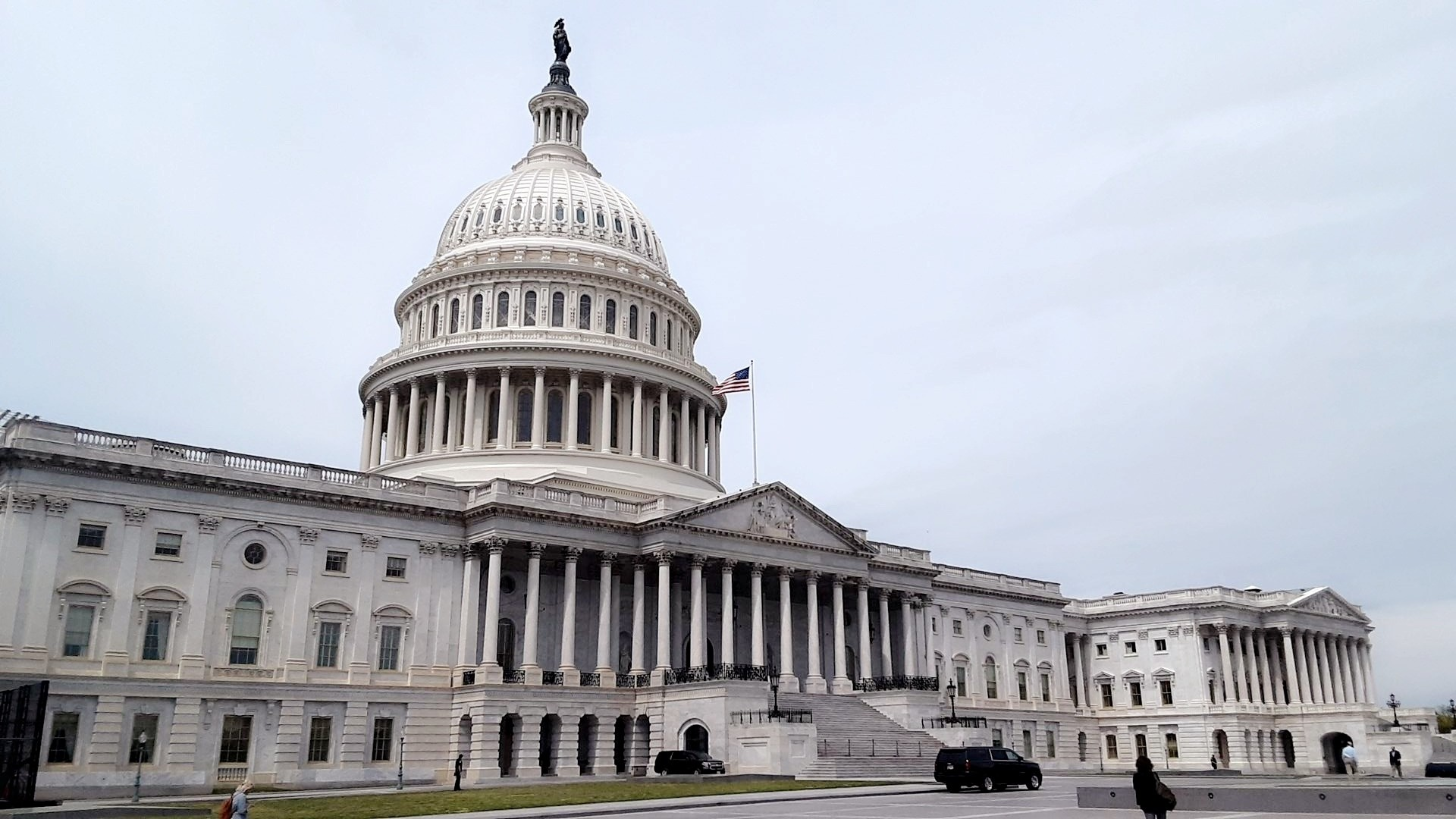
The government shutdown entered its 20th day on Monday, October 20, 2025, as Senate Majority Leader John Thune announced plans to vote on legislation that would pay federal workers deemed essential while negotiations over healthcare subsidies continue to stall. The move drew immediate opposition from House Minority Leader Hakeem Jeffries, who characterized the proposal as a political ploy designed to give President Trump discretion over which employees receive compensation.
Senate staffers were informed Monday that they will no longer be paid for the rest of the shutdown, joining hundreds of thousands of federal workers already going without paychecks as the budget crisis extends into its fourth week. The decision to furlough congressional staff highlights the increasingly severe consequences of the impasse, with even those working inside the Capitol complex now experiencing the direct financial impact of the funding lapse.
Jeffries said he doesn’t support the legislation because it appears to be more like a political ploy to pick and choose which employees get paid, adding that all employees should be compensated and that will happen when we reopen the government. The New York Democrat reiterated that his caucus wants a bipartisan path forward on funding that also includes decisively addressing what he called the Republican healthcare crisis created by refusing to extend Affordable Care Act subsidies.
Republican Senator Tommy Tuberville offered a different perspective on the essential worker payment plan, stating that paying federal workers would take the pressure off lawmakers to negotiate a way out of the shutdown. The Alabama Republican’s comments reflect internal GOP debate about whether providing paychecks during the funding lapse removes one of the primary incentives for Democrats to compromise on their healthcare subsidy demands.
Senate Armed Services Chairman Roger Wicker criticized the decision to furlough the majority of staff at the National Nuclear Security Administration, which oversees the U.S. nuclear stockpile. The Mississippi Republican’s concerns about national security implications of the shutdown demonstrate that even GOP lawmakers view some aspects of the funding lapse as creating unacceptable risks to vital government functions. The agency said it will keep contractors employed through the end of the month, though the future of those positions remains uncertain if the shutdown extends into November.
The Office of Management and Budget defended its decision to pause over 11 billion dollars in projects with the Army Corps of Engineers, describing the action as necessary fiscal management during the funding lapse. Conservative policy analysts argue that the shutdown provides an opportunity to scrutinize massive infrastructure projects that may not align with administration priorities or represent the best use of taxpayer resources.
President Trump and top administration officials continued moving forward with key foreign policy negotiations while the domestic budget crisis stretches on. Trump’s special envoy Steve Witkoff and son-in-law Jared Kushner held lengthy meetings with senior Israel Defense Forces generals in Tel Aviv at the Kirya headquarters on Monday to discuss ceasefire arrangements in Gaza. During a bilateral meeting at the White House with Australian Prime Minister Anthony Albanese, Trump threatened to eradicate Hamas if it doesn’t abide by its ceasefire agreement with Israel, saying he could order a fresh offensive in the region.
The president’s willingness to maintain an aggressive posture toward Hamas despite the ceasefire demonstrates his determination not to allow the militant organization to use temporary peace agreements as opportunities to rearm and reposition forces for future attacks on Israeli civilians. Trump’s approach reflects conservative skepticism about Palestinian compliance with negotiated agreements, based on decades of broken promises and continued terrorism against Israeli targets.
Ukraine turned to European leaders for military support after Trump reportedly urged Kyiv to cede territory to Russia as part of a negotiated settlement. The president’s approach to ending the Ukraine conflict emphasizes pragmatic territorial compromises rather than the indefinite military stalemate favored by foreign policy establishment figures who prioritize Ukrainian sovereignty over realistic peace prospects.
Trump also sparred with Colombian President Gustavo Petro over U.S. strikes on alleged drug trafficking boats in the Caribbean. The Colombian leader condemned America for blowing up boats in recent weeks, with at least seven vessels destroyed based on allegations they were being used for narcotics smuggling. Petro accused the U.S. of killing innocent Colombians, while Trump responded by calling Petro an illegal drug leader. The president threatened to cut off foreign aid to Colombia and raise tariffs on Colombian goods if Petro continues criticizing American counter-narcotics operations.
Trump defended the maritime interdiction operations by arguing that America cannot allow drug traffickers to operate with impunity just because they hide among civilian vessels. The strikes represent an escalation in U.S. counter-narcotics strategy, reflecting Trump’s frustration with traditional interdiction methods that have failed to stem the flow of cocaine and other drugs poisoning American communities.
The shutdown has now lasted 20 days, making it the second-longest in American history behind only the 35-day funding lapse during Trump’s first term. That previous shutdown from December 2018 to January 2019 also centered on Democratic refusal to fund border security measures, demonstrating a consistent pattern where progressive lawmakers block government funding to prevent Trump from implementing policies they oppose.
An estimated seven million people participated in No Kings rallies Saturday across all 50 states protesting what organizers characterized as Trump’s embrace of authoritarianism. The demonstrations represented one of the largest coordinated protest movements since the administration’s return to power, with organizers claiming events occurred at approximately 2,600 sites nationwide. Conservative commentators noted the irony of millions mobilizing against democratically elected leadership while claiming to defend democracy.
The federal government shutdown has entered its 20th day with Senate Democrats proposing legislation to keep funding the government through October 31st while reversing cuts to Medicaid and extending Affordable Care Act subsidies. That measure failed to garner the veto-proof majority of 60 votes required to overcome procedural hurdles, as Republicans maintained their position that healthcare policy should be negotiated separately from emergency government funding measures.
Trump has attempted to lay off thousands of furloughed workers during the shutdown, but that move was temporarily halted by the courts when U.S. District Judge Susan Illston in San Francisco ruled the workforce reductions unlawful. The Clinton-appointed judge’s decision represents another instance of liberal federal judges frustrating Trump’s agenda through nationwide injunctions that prevent the president from implementing policies supported by voters who elected him.
Officials in Gaza reported that Israel has killed at least 97 Palestinians and injured 230 since the ceasefire came into effect on October 10th, though Israeli officials characterized these incidents as responses to Hamas violations of the agreement. The continuing violence demonstrates the fragility of Middle East peace arrangements that depend on good faith compliance from militant organizations with long histories of breaking negotiated agreements.
Republican strategists calculate that Democrats will ultimately face political backlash from voters who view blocking government funding over healthcare subsidies as irresponsible governance that prioritizes partisan policy goals over immediate needs of federal workers and military families. However, polling shows that 60% of Americans agree the subsidies are important enough to be worth holding out for, suggesting public opinion may support the Democratic negotiating strategy despite hardship it imposes on government employees.
The question now facing Washington is whether mounting human cost of the shutdown will force one party to abandon its position before permanent damage occurs to government operations and public confidence in democratic institutions. As the funding lapse becomes one of the longest in American history with no clear path forward, political pressure intensifies on both parties to find a face-saving compromise that allows government to reopen while addressing the healthcare subsidy crisis through separate legislation that both sides can support.

Leave a comment