

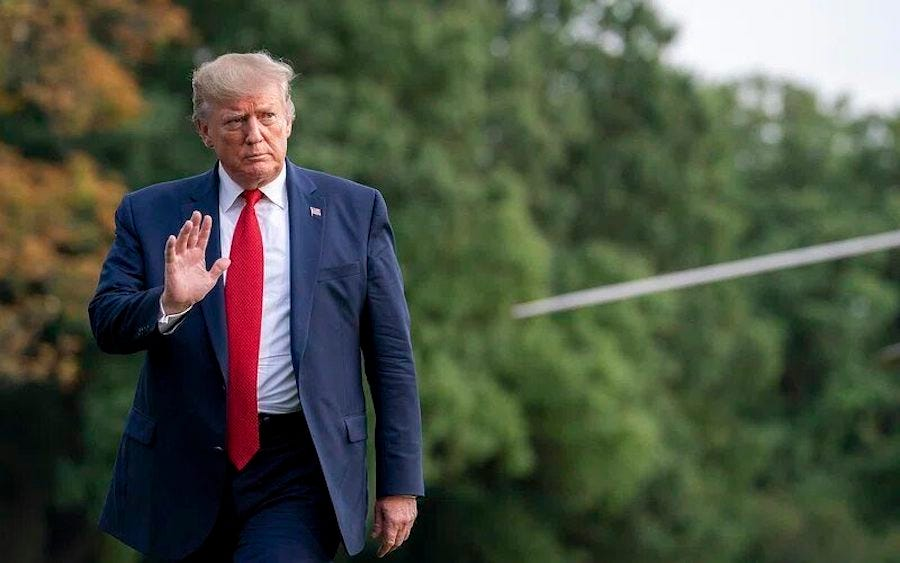
President Donald Trump made clear Sunday, October 19, 2025, that he is unlikely to compromise with Senate Democrats’ shutdown demands for an extension of Affordable Care Act tax credits, complicating bipartisan efforts by rank-and-file senators to negotiate an end to the budget crisis entering its 19th day. Trump’s hardline position came as a small group of moderate lawmakers from both parties engaged in what they described as shadow negotiations attempting to craft a deal that could break the deadlock without formal involvement from party leadership.
Republicans have rejected Trump’s call for no compromise, with Senate Majority Leader John Thune eyeing a bipartisan package that mirrors proposals moderate Democrats have been discussing among themselves. The package would replace the House-passed legislation that Democrats have rejected 14 times since the shutdown began October 1st, potentially extending government funding until December or January rather than the November 21st deadline in the current Republican bill.
Senators Jeanne Shaheen of New Hampshire and others negotiating among themselves and with some rank-and-file Republicans have been discussing bills that would pay for parts of government including food aid, veterans programs and the legislative branch while extending funding for everything else until December or January. The agreement would only come with the promise of a future healthcare vote rather than a guarantee of extended subsidies, representing a significant retreat from Democratic demands that subsidies be included in any funding legislation.
The shadow negotiations reflect growing frustration among rank-and-file members who believe party leaders have failed to find common ground after nearly three weeks of shutdown. Senator Tammy Baldwin of Wisconsin, one of those involved in the conversations, said the private conversations are trying to create a shadow negotiation so that there is clarity about what needs to be voted on. However, the emerging framework faces significant obstacles including whether enough Democrats would support such a plan given progressive resistance to reopening the government without guaranteed healthcare policy victories.
Even with a deal among moderate senators, Trump appears unlikely to support an extension of the health benefits that were temporarily expanded during the COVID-19 pandemic. House Speaker Mike Johnson also said this week that he would not commit to a healthcare vote, creating additional uncertainty about whether any compromise would survive beyond the Senate. Republican leaders only need five additional votes to fund the government, and the group involved in talks has ranged from 10 to 12 Democratic senators considering breaking with their party leadership.
After a Democratic caucus meeting Thursday, most senators suggested they would continue to hold out for Trump and Republican leaders to agree to negotiations. Senator Brian Schatz of Hawaii said Democrats are obviously not unanimous but are pretty unified in the position that without something on healthcare, the vote is very unlikely to succeed. Vermont Senator Bernie Sanders, an independent who caucuses with Democrats, said they need to stand strong after overwhelming Democratic victories on Election Day and demand an extension of the subsidies.
The reference to Election Day victories reflects progressive confidence that special elections and state-level contests during the shutdown have broken in Democrats’ favor, reinforcing their belief that voters support their negotiating position rather than viewing them as responsible for the funding lapse. Sanders’ call to stand strong suggests that progressive senators will pressure moderates not to accept any compromise that fails to guarantee healthcare subsidy extensions.
A test vote on new legislation could come in the next few days if Thune decides to move forward with the bipartisan package being discussed by rank-and-file senators. Then Democrats would face a crucial choice between keeping fighting for a meaningful deal on extending the subsidies that expire in January while prolonging the pain of the shutdown, or voting to reopen the government and hoping for the best as Republicans promise an eventual healthcare vote without a guaranteed outcome.
Senator Mike Rounds suggested that if party leaders agreed, the Senate could vote as early as next week on full-year spending bills that would allow Democrats to move on past the current funding fight and pivot to longer-term spending bills. Rounds said Republicans would put bipartisan full-year spending bills on the floor as a way around the continuing resolution that Democrats have blocked repeatedly, with the continuing resolution potentially moving only after those larger spending bills are advancing through the legislative process.
Lawmakers have faced increased pressure to reopen the government this week with crucial safety net programs including federal food assistance for more than 40 million people at risk of shuttering in coming days. The Department of Agriculture has warned that Supplemental Nutrition Assistance Program benefits will end Saturday, creating a humanitarian crisis that Democrats argue Republicans are deliberately manufacturing to force political concessions.
House Minority Leader Hakeem Jeffries declined to budge on his party’s demands during an interview on ABC, saying what Democrats need is decisive action. When asked if Senate Minority Leader Chuck Schumer should accept an offer by Thune to guarantee a vote on extending enhanced Affordable Care Act subsidies in exchange for enough Democratic votes to first reopen the government, Jeffries said he and Schumer had repeatedly made clear to Republicans that they want to negotiate a bipartisan path forward on funding that also includes an extension of the ACA tax credits.
Republican Senator Katie Britt rejected Democrats’ efforts to extend enhanced healthcare subsidies as part of a deal to reopen the government, calling the Affordable Care Act fundamentally broken. Obamacare was never affordable, Britt told anchor Dana Bash on CNN’s State of the Union, adding that from the very beginning this was a flawed program. Britt argued that continuing the subsidies without reform would be irresponsible and that the time for that debate is after reopening government.
The Alabama Republican’s position reflects the philosophical divide separating the parties on healthcare policy, with conservatives viewing the pandemic-era subsidy expansions as temporary emergency measures that should not be made permanent while progressives characterize them as essential protections preventing millions from losing affordable coverage. This fundamental disagreement makes compromise extraordinarily difficult even when moderates from both parties express willingness to negotiate.
Trump shared an apparently AI-generated video Sunday of himself wearing a crown and flying a fighter jet dumping what appears to be waste onto “No Kings” protesters after the nationwide demonstrations Saturday. The provocative social media post demonstrated the president’s combative approach to political opposition, mocking millions of Americans who took to the streets protesting his policies rather than seeking to lower temperatures or find common ground.
The question now facing Washington is whether the shadow negotiations among rank-and-file senators can produce a compromise acceptable to party leaders and the White House, or whether the shutdown will extend deeper into November as both sides dig in on fundamentally incompatible positions. The standoff has already become one of the longest in American history, with no clear resolution emerging despite growing human costs and mounting political pressure on both parties to find a face-saving exit strategy.
Conservative policy analysts argue that Democrats’ insistence on bundling healthcare subsidies with government funding represents a dangerous precedent where minority parties can extract policy concessions by threatening to maintain shutdowns indefinitely. Republicans maintain that their clean continuing resolution approach represents responsible governance that separates routine funding measures from controversial policy debates requiring extended negotiations.
Democrats counter that Republicans are using the shutdown to avoid addressing a looming healthcare crisis where millions will lose affordable coverage if subsidies expire at year’s end. The Democratic argument emphasizes that addressing the subsidy expiration cannot wait for separate negotiations after the government reopens because open enrollment begins November 1st in most states, meaning consumers will start viewing 2026 premiums this month and could be deterred from signing up by dramatically higher prices.
Representative Alexandria Ocasio-Cortez said during a CNN town hall that she will not accept a measly one-year extension of the ACA, adding that Democrats have to make sure they are not falling for the politics around this. Her hardline stance suggests that even if Republicans agree to extend subsidies, progressive Democrats may demand multi-year extensions that would lock in expanded government healthcare spending far beyond the immediate budget crisis.
As the 19th day of the shutdown concluded Sunday with Trump ruling out healthcare compromises and party leaders still not engaged in direct negotiations, the bipartisan shadow talks among rank-and-file senators represented the most promising avenue for ending the standoff. However, whether those discussions can produce legislation acceptable to enough members of both parties to overcome procedural hurdles and secure presidential signature remains highly uncertain as the budget crisis extends into its fourth week with no breakthrough in sight.

Leave a comment