

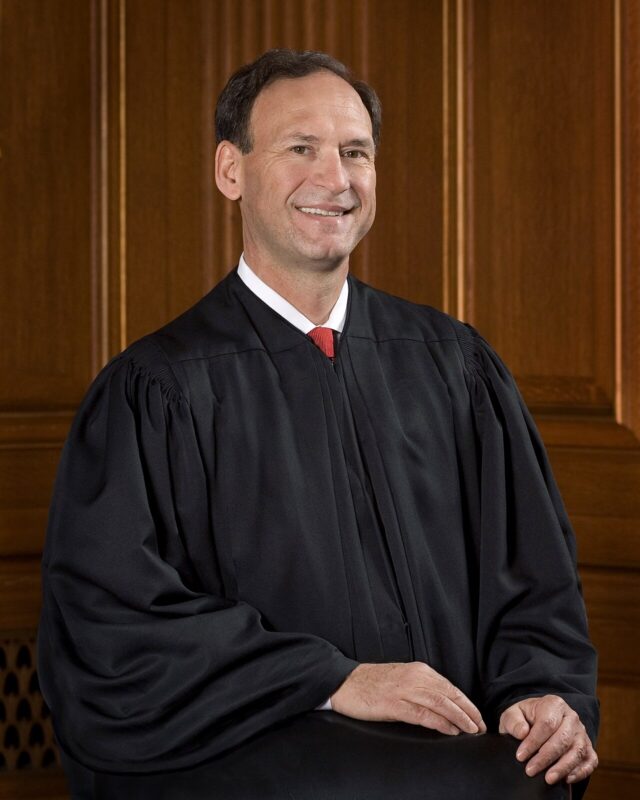
Justice Samuel Alito defended the Supreme Court’s decision to overturn Roe v. Wade, saying it was “perfectly clear” the Constitution did not establish a right to abortion, the New York Post reported. In a prerecorded interview with “Fox News Sunday,” he also condemned the threats against justices that followed the leak of a draft opinion.
Alito, who wrote the 2022 opinion in Dobbs v. Jackson Women’s Health Organization, presented the ruling as an example of interpreting the Constitution according to its text and historical meaning rather than a judge’s personal preferences, according to the Post.
The interview came during a brief media tour promoting his book, “So Ordered: An Originalist’s View of the Constitution, the Court, and Our Country,” ahead of the Supreme Court’s new term beginning Monday, the newspaper reported.
The Constitutional Argument Behind Dobbs
Alito’s defense centered on the meaning of liberty when the Fourteenth Amendment was adopted in 1868. According to the Post, he argued that abortion laws in force at the time contradicted the claim that the amendment established a nationwide abortion right.
“I know this is very controversial, but I thought it was perfectly clear that the reference to liberty in the 14th Amendment adopted in 1868 did not mean that there is a constitutional right to abortion,” Alito said.
“In 1868, abortion was illegal in most of the states,” he continued. “And so it is unthinkable that those states would ratify an amendment that rendered their own laws unconstitutional and then continue to have those laws on the books for decades after that.”
The Post described Alito as an adherent of originalism, a legal philosophy that considers constitutional and statutory language according to how it would have been understood when written. He has called himself a “practical originalist” and, more recently, a “working judicial originalist,” while expressing concern about academic originalism becoming too pure.
As the newspaper explained, Roe and the precedents that followed it recognized an abortion right through a constitutional right to privacy. Alito’s Dobbs opinion emphasized that the Constitution’s text mentions neither abortion nor a right to privacy.
The ruling returned the abortion issue to Congress and the states, according to the Post. That shift put the policy question back before elected lawmakers rather than leaving a nationwide right in place under Roe. Alito’s interview defended that constitutional distinction, not a particular abortion statute.
Leaked Opinion and Threats Against Justices
Alito also revisited the May 2022 disclosure of the draft Dobbs opinion to Politico, weeks before the court formally issued its decision. The Post reported that justices in the majority faced a torrent of death threats during that period.
“That was totally unprecedented in the history of the country,” Alito said of the leak. “It was a grave breach of the trust that everybody who worked in this building had before that point.”
He said the disclosure “very predictably made the five of us in the majority targets for assassination and nearly resulted in the assassination of my colleague Brett Kavanaugh.”
According to the Post, Nicholas Roske arrived armed at Kavanaugh’s home in June 2022 in an apparent assassination plot that was foiled. The newspaper also noted that Justice Amy Coney Barrett later recounted explaining to her children why she was wearing a bulletproof vest after the leak.
Alito said he has a theory about who disclosed the draft, but acknowledged that the “evidence available at this time is not strong enough” to identify that person. He did not name a suspect in the remarks reported by the Post.
Beyond the leak, Alito said he believes there is “a concerted effort to intimidate the court and justices on the court,” aimed at influencing how they decide cases, the newspaper reported.
Pandemic Restrictions and Religious Liberty
The interview also addressed constitutional protections during COVID-19. Alito described lockdown policies as “a stress test of our constitutional rights,” according to the Post.
He said the experience showed that many people were willing to downgrade freedom of speech and the free exercise of religion. As an example, he contrasted Las Vegas casinos allowing people to go without masks with severe attendance limits imposed on houses of worship, the newspaper reported. His criticism focused on whether those constitutional freedoms received adequate protection during the restrictions.
Source: nypost.com

Leave a comment