

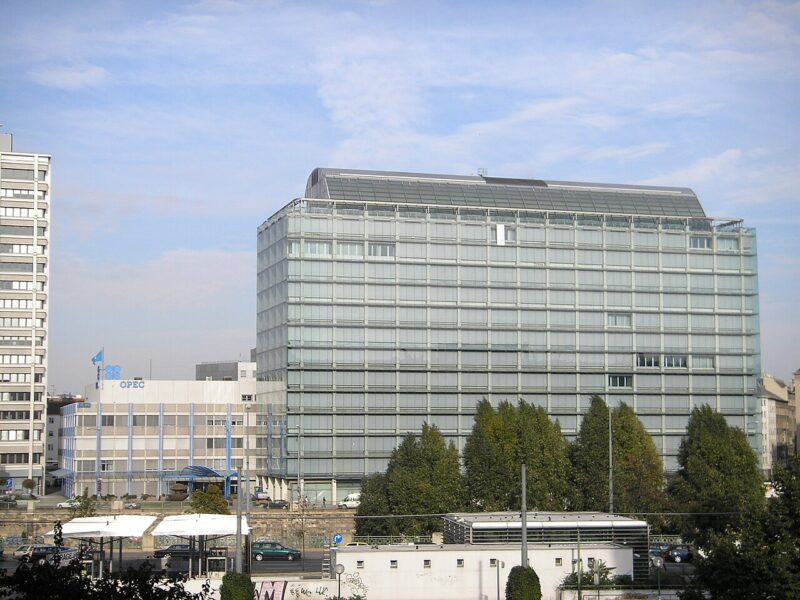
OPEC+ agreed Sunday to keep November oil production targets unchanged, leaving its formal supply policy intact as war-related export disruptions continue to constrain Gulf producers. The decision matched expectations that further changes are unlikely before next year, according to the New York Post’s report.
Seven core members approved the targets during a brief online meeting: Saudi Arabia, Russia, Iraq, Kuwait, Algeria, Kazakhstan and Oman. The broader alliance includes the Organization of the Petroleum Exporting Countries and allied producers, including Russia, the report said.
For consumers and businesses watching energy costs, the key distinction is between the barrels producers are authorized to pump and the barrels they can actually supply. The report describes a market where production remains far below targets, despite earlier decisions to allow more output.
Export disruptions outweigh production targets
Gulf OPEC+ producers have been pumping well below their targets amid continuing export disruptions caused by the US-Israeli war on Iran, according to the report. Their exports have fluctuated between 60% and 80% of normal levels in recent months, limiting the practical effect of higher production ceilings.
UBS analyst Giovanni Staunovo said the November decision was consistent with market expectations. But he cautioned that improving traffic through a critical shipping route had not closed the gap between permitted production and actual output.
“The OPEC+ group of seven kept their production ceilings unchanged, in line with market expectations. That said, despite rising flows through the Strait of Hormuz, their output levels remain well below quota,” Staunovo said. “Consequently, the oil market remains tight.”
The production figures show both a partial recovery and a substantial remaining shortfall. The seven core members pumped 25 million barrels per day in August, an increase of 630,000 barrels per day from July, according to OPEC data cited in the report. Even with that improvement, their combined output was still roughly 5 million barrels per day below February’s prewar levels.
OPEC+ has raised output targets for much of 2026 after years of production cuts, the report said. Most of those increases, however, remained on paper because of the Middle East conflict. Sunday’s decision therefore preserves the existing ceilings without resolving the disruptions that have prevented producers from reaching them.
Brent stays above $100 despite reserve action
Oil prices dropped Friday after European leaders agreed to President Donald Trump’s request to release diesel reserves, according to the report. That decline did not bring the benchmark crude price back near its level before the war.
Brent crude remained above $100 a barrel, compared with about $73 before the Iran war began in late February. The contrast underscores the limits of the recent price retreat: the market was still trading substantially above its prewar benchmark even after the agreement on diesel reserves.
For Americans concerned about fuel expenses, the report offers no forecast for gasoline, diesel or household energy bills. It does establish that crude remains costly relative to its prewar level and that the supply constraints identified by Staunovo persist. The November target decision alone is not an announcement of additional barrels reaching the market.
Capacity review complicates the next decision
The war has also delayed an OPEC+ review of production capacity that is crucial to setting members’ 2027 output quotas. Industry sources told Reuters last week that the conflict had made estimates of future production potential uncertain, according to the Post’s account.
That review matters because the alliance still has about 2 million barrels per day of output cuts in place across most members, the report said. OPEC+ needs the review’s results to determine how to distribute production increases. Sources cited in the report said any output changes were unlikely before 2027.
A separate OPEC+ ministerial body, the Joint Ministerial Monitoring Committee, also met Sunday to review market conditions. That committee does not decide production policy, the report noted. Its market review was distinct from the seven core members’ decision to leave November ceilings unchanged.
Together, the unresolved capacity review and continuing export disruptions leave two separate constraints on the alliance’s next steps: determining how future quotas should be allocated and restoring production already permitted under current targets. For November, the formal targets remain steady while actual supply continues to lag.
Source: nypost.com

Leave a comment