

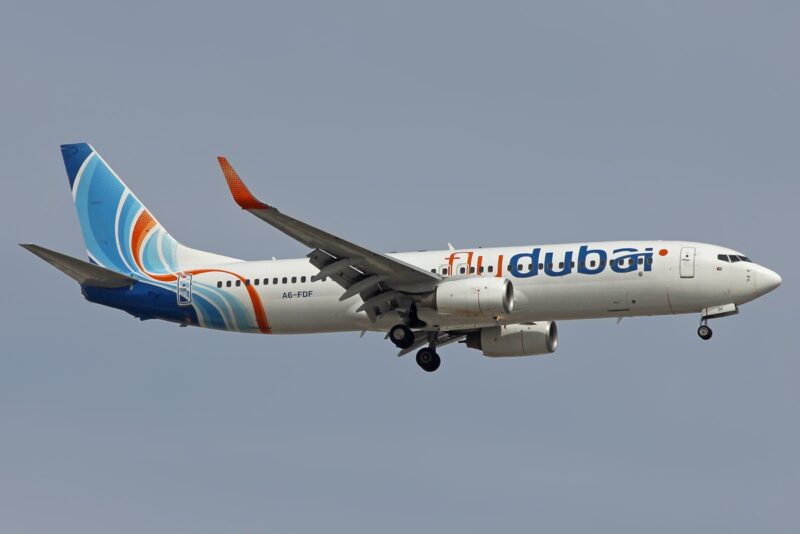
A violent cockpit attack aboard FlyDubai flight 1073 has prompted calls for tougher, continuous screening of airline personnel, with a former Israeli military pilot warning that technical competence alone cannot protect passengers from insider threats. Speaking to Fox News Digital, Eliran Almog described the aircraft’s emergency landing in Saudi Arabia as a remarkable recovery after a plunge of more than 14,000 feet in 30 seconds.
According to Fox News, the flight’s copilot, identified as 29-year-old Omani national Hamam al-Hammami, allegedly stabbed Capt. Smit Machchhar during the flight. Officials said the seriously injured captain managed to press a button opening the cockpit door, allowing Israeli passengers to enter and subdue the attacker.
A second FlyDubai crew happened to be aboard and stabilized the aircraft before completing the emergency landing, Fox News reported. Almog, a former Israeli Air Force helicopter pilot who now leads an aviation cybersecurity company, said the aircraft’s survival and the crew’s ability to land it were extraordinary.
A recovery under extreme stress
Almog told Fox News Digital that video from the cabin conveyed only part of what passengers endured as the aircraft descended. Screaming children and passengers struggling to understand the emergency added to the terror of the sudden plunge.
“The g-force on the plane was enormous, and you basically think you are going to die,” Almog said, adding that “it’s crazy that the aircraft did not break up in the air, and landing it with the tail damage it sustained was remarkable.”
He cautioned against assuming that any qualified pilot could easily take over in those circumstances. Commercial aircraft have different configurations, landing procedures and operating limitations, he explained, making a recovery under severe stress especially demanding.
“As a pilot, if I were in this situation, I’m not sure I could have landed the aircraft,” Almog told Fox News Digital. He credited the passengers’ resilience, Machchhar’s courage and the presence of additional pilots with preventing a disaster.
Screening beyond the hiring process
Almog’s central recommendation was that airlines treat personnel screening as a continuing safety responsibility rather than a hurdle cleared at hiring. He told Fox News Digital that carriers need to assess psychological stability and potential political risks alongside the technical and cognitive abilities required to fly.
“Because aviation is critical infrastructure, we must rethink how we screen pilots, not just initially, but continuously,” he said. His proposed approach includes tools to identify family problems, psychological distress or developing extreme views that could present a risk, even among experienced pilots.
Almog called on governments and regulators to intervene and urged continuous support for flight crews. His recommendations place responsibility on both carriers and public authorities to address risks involving people already entrusted with access to aircraft and flight operations.
That scrutiny should not stop at the cockpit, he argued. Cabin crew and maintenance workers also affect safety, and aviation depends on a complex supply chain. Incorrect fuel balance or maintenance parameters can threaten an aircraft, he told Fox News Digital.
Almog also said more than 80% of cybersecurity threats come from insiders, some of whom do not recognize that they are creating a risk. He cited that figure while arguing for broader background monitoring and psychological screening, not as an investigative finding about the FlyDubai attack.
Investigations and regional security risks
Fox News reported that multiple countries, including Israel and Saudi Arabia, were investigating al-Hammami and the incident. Israeli Prime Minister Benjamin Netanyahu told Fox & Friends that the copilot had been exposed to “Islamist radical indoctrination.” President Donald Trump suggested he could have been trained or motivated by Iran’s Islamic Revolutionary Guard Corps.
Those statements were attributed to the two leaders, rather than presented in the report as conclusions from the ongoing investigations. The distinction leaves the alleged attacker’s motivations and any outside involvement as matters still requiring investigative answers.
Almog separately warned that Middle East conflicts are increasing airlines’ exposure to geopolitical risks. He said his work includes tracking satellite-navigation jamming and spoofing, with the locations of those activities closely reflecting areas of conflict.
For passengers, including Americans traveling internationally, the safety concerns Almog identified extend beyond the qualifications of the pilots at the controls. His recommendations address the personnel, maintenance work and navigation systems on which flights depend, while the FlyDubai incident remains under investigation.
Source: foxnews.com

Leave a comment